
-
New ArrivalsNew Arrivals
-
Flower seedsFlower seedsFlower seedsShop by NameShop by TypeShop by CollectionShop by Sowing Month
-
Vegetable SeedsVegetable SeedsVegetable SeedsShop by NameShop by CollectionsShop by Culinary ThemeShop by Sowing Month
-
Herb SeedsHerb SeedsHerb SeedsShop by NameShop by UseShop by Sowing Month
-
Seed Stories
-
Contact usContact us
- Log in
-
We use cookies and similar technologies to provide the best experience on our website.
All-Year-Round Growing
Sort by:
11 products
11 products
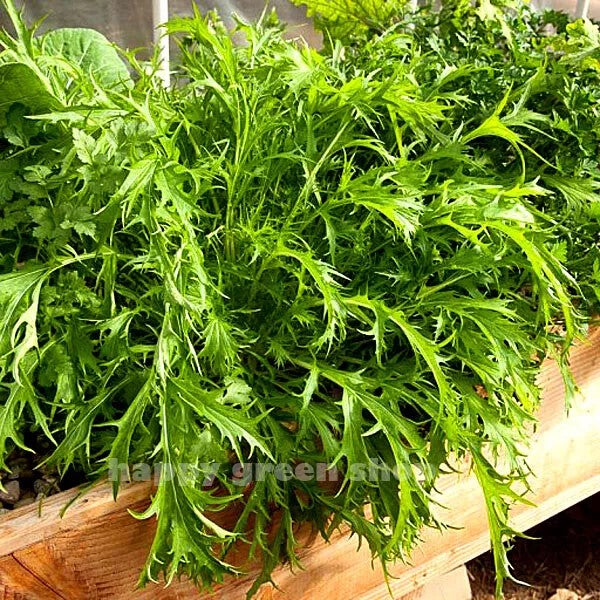


Mizuna – Seeds (Brassica rapa var. japonica)
A staple of Japanese cuisine, Mizuna is a fast-growing leafy green with elegant, feathery leaves and a mild, peppery flavor. Often used in salads, stir-fries, and soups, it’s highly versatile and easy to grow. Mizuna is also very cold-tolerant, making it an excellent choice for year-round harvests, especially in spring and autumn.
How to Grow
-
Sow outdoors from March to September or under cover in winter for year-round harvest.
-
Sow thinly, 0.5 cm deep, in rows 15–20 cm apart.
-
Prefers moist, fertile, well-drained soil in sun or partial shade.
-
Harvest leaves young for salads or allow plants to mature for cooking.
Key Features
-
Japanese mustard green with feathery leaves
-
Mild, peppery taste – great for salads, stir-fries & soups
-
Fast-growing and highly productive
-
Cold-hardy and suitable for year-round cultivation
-
Cut-and-come-again variety for continuous harvest
Ideal For
-
Asian-inspired cooking
-
Salads, soups, and stir-fries
-
Kitchen gardens, raised beds, or containers
-
Succession sowing for steady supply
Sowing & Harvest
-
Sow: March to September (under cover in winter)
-
Depth: 0.5 cm
-
Spacing: 15–20 cm
-
Harvest: 3–6 weeks after sowing
Quick Tip
-
Regular harvesting of young leaves will extend the cropping period and prevent the plants from bolting.


Marguerite Yellow Daisy Seeds (Anthemis tinctoria)
Marguerite Yellow Daisy is a hardy perennial that produces bright, cheerful yellow daisy-like flowers from early summer to autumn. Its aromatic foliage and long-lasting blooms make it perfect for borders, cottage gardens, and pollinator-friendly plantings. Easy to grow and low-maintenance, it brings sunshine to any garden space.
What Makes It Special
-
Vibrant yellow daisy-like blooms all summer
-
Aromatic foliage adds texture and interest
-
Hardy, long-flowering, and attracts pollinators
Key Features
-
Botanical name: Anthemis tinctoria
-
Hardy perennial
-
Height: 50–70 cm
-
Bloom time: Early summer to autumn
Ideal For
-
Borders and cottage gardens
-
Pollinator-friendly plantings
-
Cut flowers and naturalized areas
Sowing
-
Sow indoors Feb–Apr or outdoors Apr–Jun
-
Cover seeds lightly with soil
-
Germination: 14–21 days at 18–22°C
-
Space seedlings 30–40 cm apart
-
Flowers from the second year onward
Showing 11/11
Recently viewed


Need help