
Sort by:
868 products
868 products
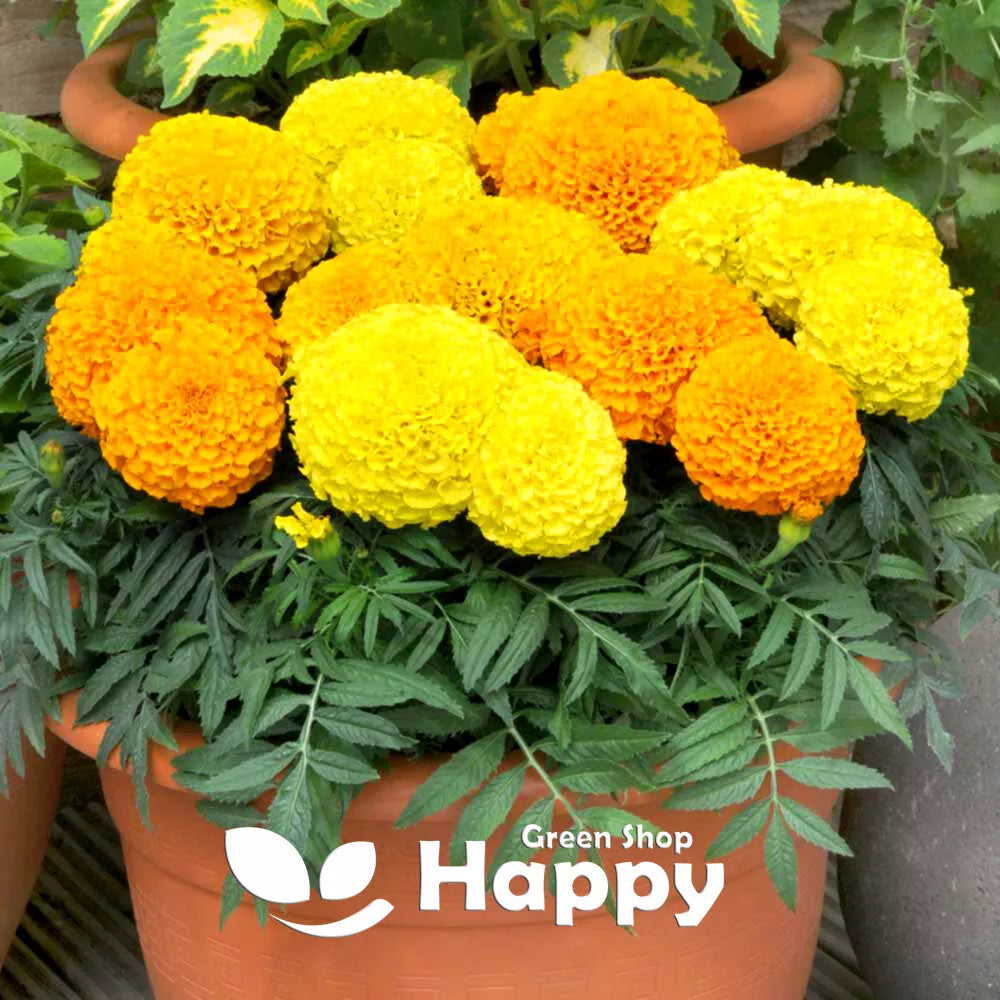
African Marigold Dwarf ‘Maximix’ – Bold Blooms, Compact Size
Enjoy the grandeur of African marigolds in a small-space-friendly form with Dwarf ‘Maximix’ – a vibrant mix of large, double blooms in gold, lemon, and orange. These compact Tagetes erecta nana plants flower prolifically all summer, adding rich color to borders, pots, and bedding schemes without overtaking your garden.
What Makes It Special
-
Dwarf African marigold – compact yet showy
-
Large, fully double blooms in a cheerful mix of colors
-
Thrives in hot, sunny spots with minimal care
-
Naturally deters pests – perfect for companion planting
-
Long-lasting blooms from summer to frost
Key Features
-
Height: 25–30 cm – perfect for edging and pots
-
Large, round blooms in gold, orange, and lemon
-
Easy to grow and low-maintenance
-
Attracts bees, butterflies, and other pollinators
-
Excellent for borders, pots, and bedding
Ideal For
-
Borders & Edging – Bright, tidy outlines for garden beds
-
Containers & Patio Pots – Perfect for small spaces
-
Vegetable Gardens – Works as a natural pest deterrent
-
Seasonal Bedding – Summer-to-autumn displays of color
Sowing
-
When to Sow: Indoors 4–6 weeks before last frost, or direct sow outdoors after frost danger has passed.
-
How to Sow: Sow seeds 0.5 cm deep in well-draining soil.
-
Germination Time: 7–14 days at 18–22°C.
-
Spacing: 20–25 cm apart for healthy, bushy growth.
-
Sunlight: Full sun for best flowering and color.
Grow ‘Petite’ Yellow marigolds for a garden that shines bright all season long!
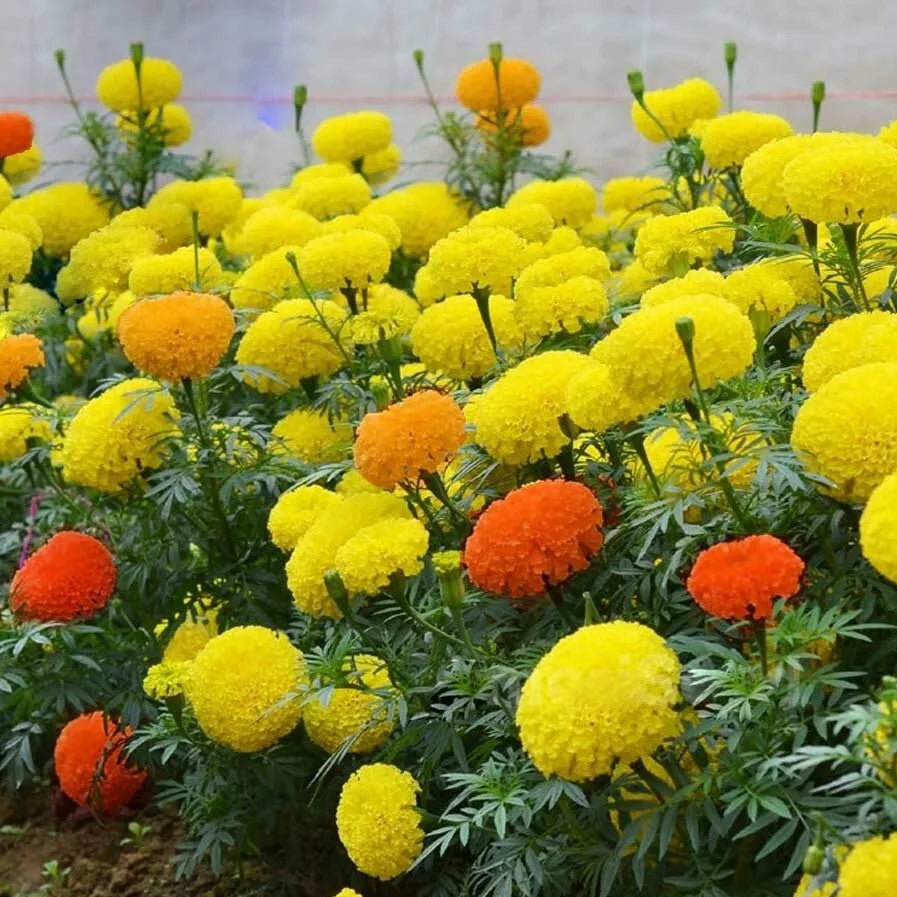
African Marigold ‘Dwarf F1 Indiana’ Mix – Seeds (Tagetes erecta)
African Marigold ‘Dwarf F1 Indiana’ Mix is a compact, fast-growing annual producing abundant, vibrant blooms in shades of gold, orange, and yellow. Its tidy, dwarf habit makes it perfect for borders, containers, and bedding schemes, offering long-lasting summer color with minimal care. Hardy and easy to grow, this marigold is ideal for brightening up gardens and attracting pollinators.
Why Grow "Dwarf F1 Indiana Mix"
-
Abundant vibrant blooms in gold, orange, and yellow
-
Compact, tidy habit ideal for borders and containers
-
Long flowering season throughout summer
-
Attracts pollinators and adds color to the garden
Key Features
-
Type: Annual (Tagetes erecta)
-
Height: 25–35 cm
-
Flowering: Summer to early autumn
-
Position: Full sun
-
Uses: Borders, beds, containers, pollinator-friendly gardens
Ideal For
-
Bedding schemes and low borders
-
Patio and balcony containers
-
Pollinator-friendly gardens
-
Gardeners seeking easy-to-grow, vibrant summer color
Sowing & Growing
-
Sow indoors: 6–8 weeks before last frost
-
Sow outdoors: After frost danger has passed
-
Germination: 7–14 days
-
Space seedlings: 20–25 cm apart
-
Prefers full sun and well-drained soil
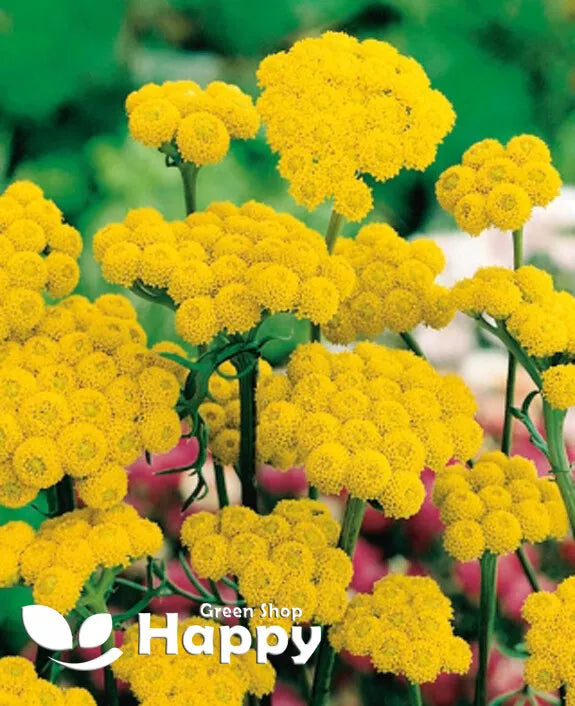
Ageratum Yellow – Seeds (Lonas indora)
Ageratum Yellow is a compact, bushy annual producing clusters of cheerful yellow, fluffy blooms throughout the summer. Its long flowering season and dense foliage make it perfect for borders, containers, and bedding displays. Easy to grow and low-maintenance, this variety brightens garden spaces while attracting pollinators like bees and butterflies.
Why Grow "Ageratum Yellow"
-
Compact, bushy plants with bright yellow blooms
-
Long flowering season for continuous summer color
-
Attracts bees, butterflies, and other pollinators
-
Ideal for borders, containers, and bedding schemes
Key Features
-
Type: Annual (Lonas indora)
-
Height: 20–30 cm
-
Flowering: Summer
-
Position: Full sun to partial shade
-
Uses: Borders, beds, containers, pollinator gardens
Ideal For
-
Adding cheerful yellow to borders and beds
-
Patio and balcony containers
-
Pollinator-friendly garden planting
-
Gardeners seeking low-maintenance, long-flowering plants
Sowing & Growing
-
Sow indoors: 6–8 weeks before last frost
-
Sow outdoors: After frost danger has passed
-
Germination: 10–14 days
-
Space seedlings: 20–25 cm apart
-
Prefers well-drained soil and full sun to partial shade
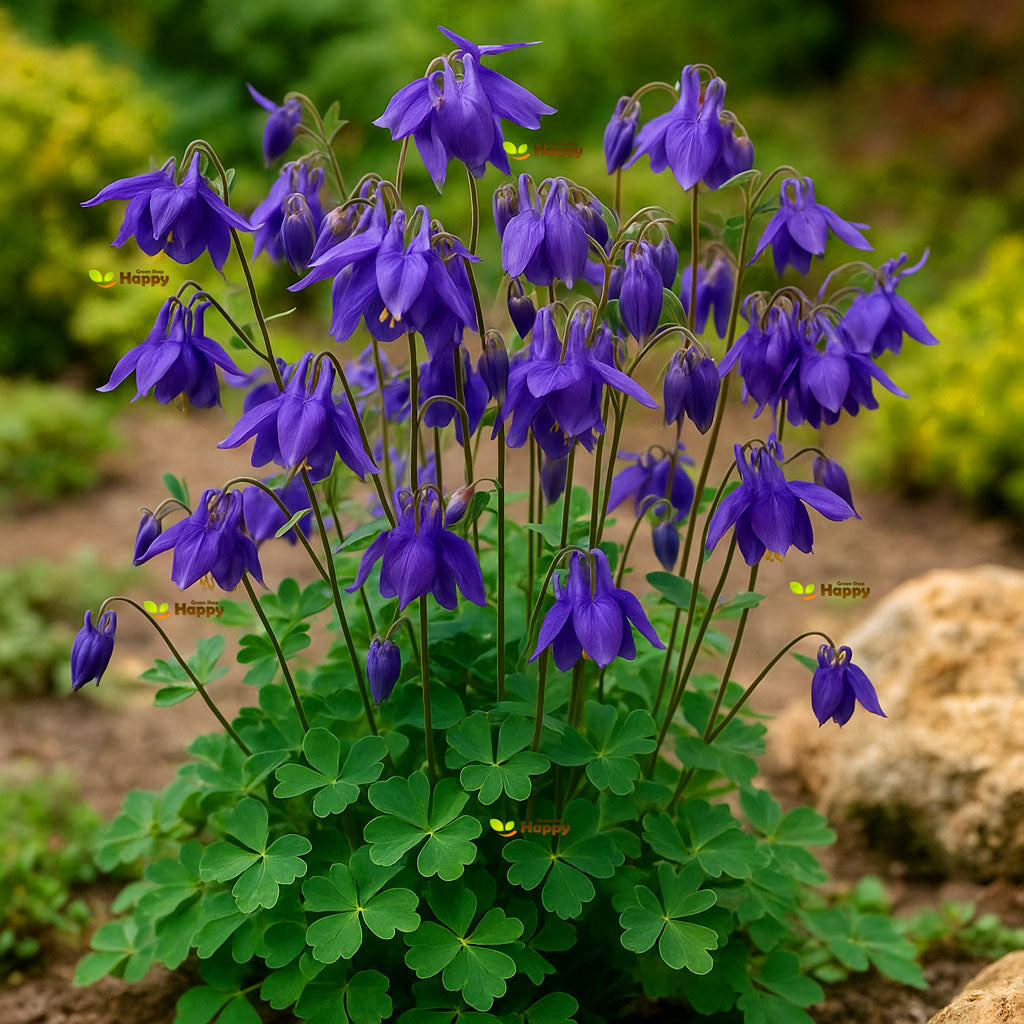
Alpine Columbine Blue – Seeds (Aquilegia alpina)
Alpine Columbine Blue (Aquilegia alpina) is a hardy perennial prized for its striking, deep blue, spurred flowers that bloom in late spring to early summer. Compact and elegant, this alpine variety is perfect for rock gardens, borders, and alpine-style beds. Easy to grow and long-lived, it attracts bees, butterflies, and other pollinators, adding beauty and ecological value to your garden.
Why Grow "Alpine Columbine Blue"
-
Stunning deep blue, spurred flowers
-
Long-lasting blooms from late spring to early summer
-
Hardy, compact, and low-maintenance
-
Pollinator-friendly and perfect for alpine gardens
Key Features
-
Type: Perennial (Aquilegia alpina)
-
Height: 30–40 cm
-
Flowering: Late spring to early summer
-
Position: Full sun to partial shade
-
Uses: Rock gardens, borders, alpine-style beds, pollinator gardens
Ideal For
-
Alpine and rock gardens
-
Borders and compact perennial beds
-
Pollinator-friendly planting schemes
-
Adding early summer color
Sowing & Growing
-
Sow indoors: February–April in trays or pots
-
Germination: 14–21 days at 15–20°C
-
Transplant seedlings outdoors after frost, spacing 25–30 cm apart
-
Prefers well-drained soil in sun to partial shade
-
Mulch in winter for protection in colder regions
Alpine Forget-Me-Not Mix Seeds (Myosotis alpestris)
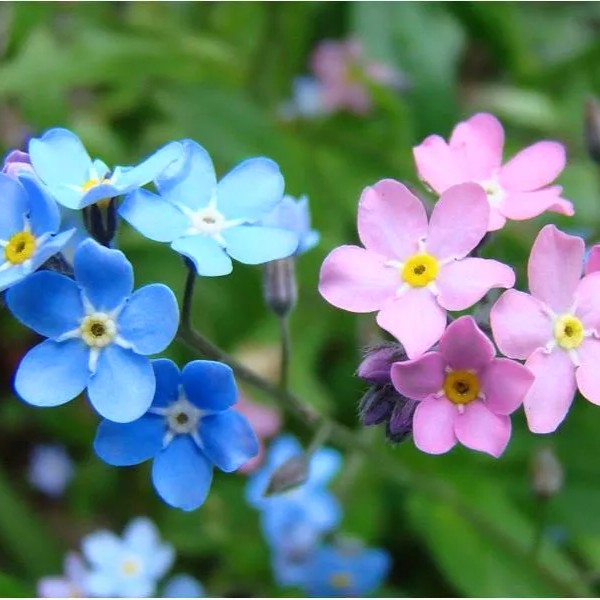
The Alpine Forget-Me-Not Mix is a charming, low-growing perennial that produces masses of tiny star-shaped flowers in soft shades of blue, pink, and white. Known for their delicate beauty and sentimental symbolism, forget-me-nots are perfect for naturalizing in borders, rock gardens, and wildflower meadows. These compact plants are especially suited for alpine and cottage garden settings, where they create a cheerful carpet of spring color.
What Makes It Special
-
Beloved for their dainty flowers and long-lasting symbolism of remembrance
-
Compact, low-growing plants ideal for rock gardens and alpine beds
-
Early-season blooms bring vibrant color to spring gardens
-
Excellent for naturalizing and combining with tulips or daffodils
Key Features
-
Botanical name: Myosotis alpestris
-
Variety: Alpine Mix
-
Height/Spread: 15–25 cm tall, 15–20 cm spread
-
Position: Full sun to partial shade; thrives in moist, well-drained soil
-
Flowering period: Spring to early summer
-
Lifespan: Hardy perennial (often grown as biennial in some climates)
Ideal For
-
Rock gardens and alpine beds
-
Cottage gardens and wildflower meadows
-
Spring bulb companions (daffodils, tulips)
-
Borders, edging, and naturalized plantings
Sowing Instructions
-
When to sow: Late spring to early summer (May–July) for flowers the following year.
-
How to sow:
-
Sow thinly in trays or directly in a prepared bed.
-
Cover lightly with fine soil or compost.
-
Keep soil moist until germination (1–3 weeks).
-
-
Transplant/Thin: Space plants 15–20 cm apart.
-
Care: Prefers cool, moist conditions. Allow some plants to self-seed for naturalized drifts.

Alpine Forget-Me-Not Pink Seeds (Myosotis alpestris)
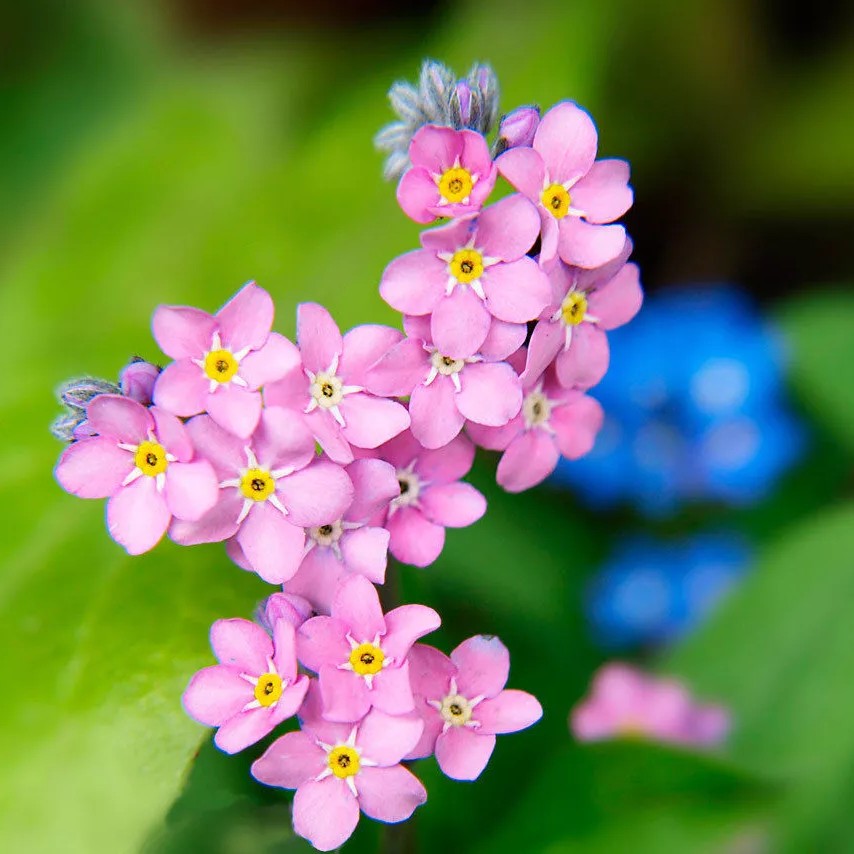
The Alpine Forget-Me-Not Pink is a delightful variation of the classic alpine flower, producing clusters of soft pink star-like blooms with cheerful yellow centers. Compact, hardy, and easy to grow, this alpine treasure brings a gentle pastel touch to borders, rock gardens, and naturalized plantings. Its romantic tones make it especially beautiful when planted alongside the traditional blue and rare white forms.
What Makes It Special
-
Uncommon pink form of the traditional alpine flower
-
Hardy and resilient, thrives in cool climates and rocky soil
-
A symbol of remembrance and affection, with a softer romantic hue
-
Perfect companion to blue and white alpine forget-me-nots
Key Features
-
Botanical name: Myosotis alpestris
-
Variety: Alpine Pink
-
Height/Spread: 15–25 cm tall, 15–20 cm spread
-
Position: Full sun to partial shade; prefers moist, well-drained soil
-
Flowering period: Spring to early summer
-
Lifespan: Hardy perennial (commonly grown as a biennial)
Ideal For
-
Rock gardens and alpine displays
-
Mixed pastel-themed borders
-
Cottage and wildflower gardens
-
Planting with spring bulbs (tulips, daffodils, hyacinths)
-
Combining with blue and white forget-me-nots for a tricolor effect
Sowing Instructions
-
When to sow: Late spring to mid-summer (May–July) for blooms the following spring.
-
How to sow:
-
Sow thinly on trays or directly outdoors into finely raked soil.
-
Cover lightly with soil or compost.
-
Keep moist until germination (10–21 days).
-
-
Transplant/Thin: Space seedlings 15–20 cm apart once large enough to handle.
-
Care: Allow plants to self-seed for naturalized displays year after year.
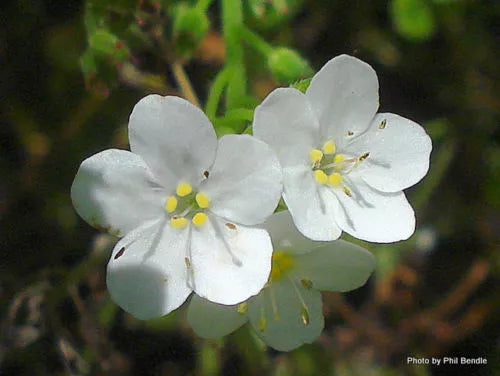
Alpine Forget-Me-Not White Seeds (Myosotis alpestris)
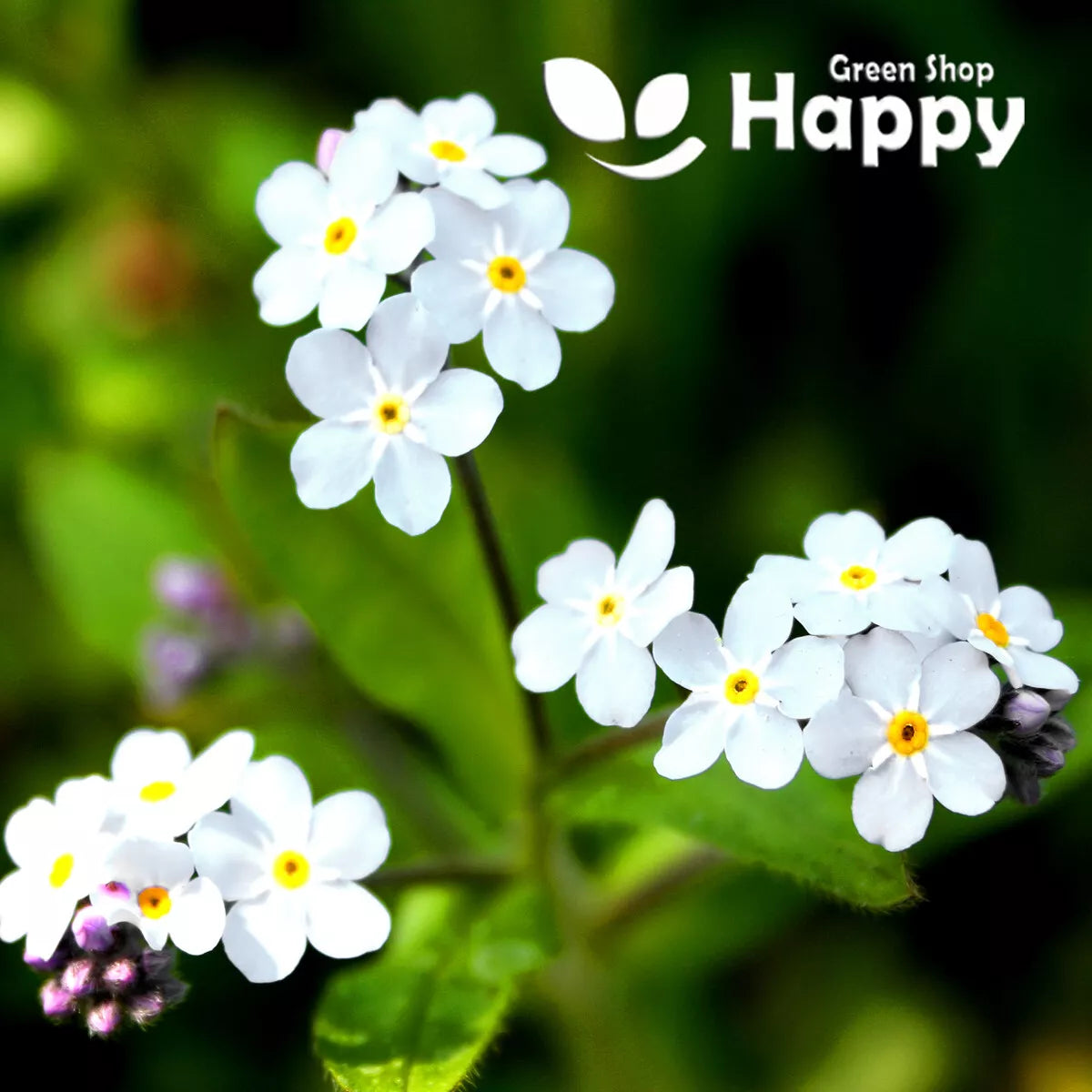
The Alpine Forget-Me-Not White is a rare and elegant form of the classic alpine flower, producing clusters of pure white star-like blooms with delicate yellow centers. Compact and easy to grow, this hardy perennial is perfect for adding a touch of brightness to shady corners, rockeries, and spring borders. Its soft charm makes it a beautiful companion to blue and pink varieties, creating a natural alpine display.
What Makes It Special
-
Unusual snow-white blooms, less common than the classic blue
-
Hardy and resilient, ideal for cool and mountainous conditions
-
A symbol of purity, remembrance, and enduring affection
-
Pairs beautifully with colored alpine flowers and spring bulbs
Key Features
-
Botanical name: Myosotis alpestris
-
Variety: Alpine White
-
Height/Spread: 15–25 cm tall, 15–20 cm spread
-
Position: Full sun to partial shade; prefers moist, well-drained soil
-
Flowering period: Spring to early summer
-
Lifespan: Hardy perennial (often grown as a biennial)
Ideal For
-
Rock gardens and alpine borders
-
Shady garden spots
-
Cottage and wildflower gardens
-
Mixed displays with blue and pink forget-me-nots
-
Spring bulb underplanting (tulips, daffodils, hyacinths)
Sowing Instructions
-
When to sow: Late spring to mid-summer (May–July) for blooms the following spring.
-
How to sow:
-
Sow thinly on trays or directly into finely raked soil outdoors.
-
Cover lightly with soil or compost.
-
Keep moist until germination (10–21 days).
-
-
Transplant/Thin: Space seedlings 15–20 cm apart when large enough to handle.
-
Care: Allow to self-seed naturally for repeat displays year after year.
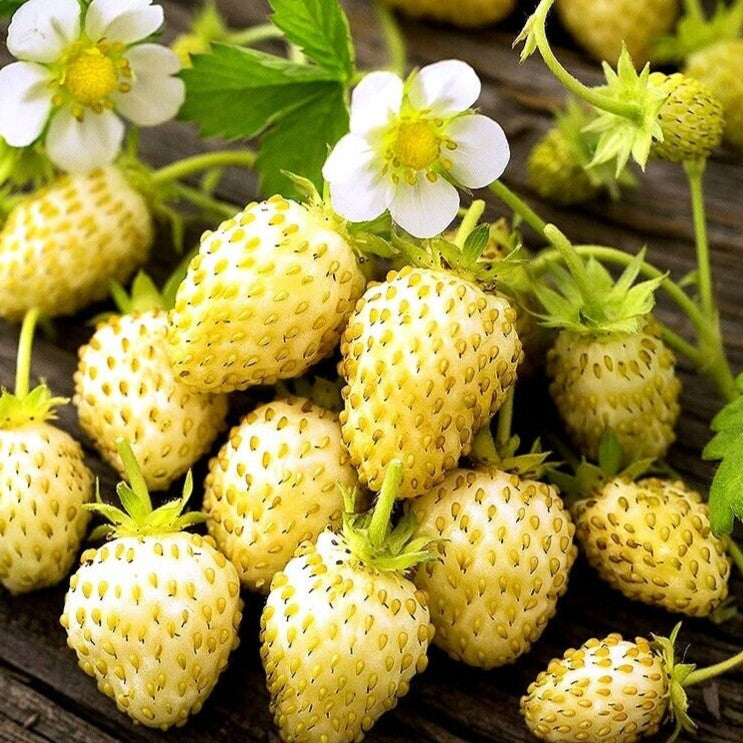
Alpine Strawberry ‘White Soul’ – 200 Seeds (Fragaria vesca)
Alpine Strawberry ‘White Soul’ (Fragaria vesca) is a charming, compact perennial producing small, sweet white fruits. Ideal for borders, containers, and edible gardens, its fragrant flowers and unique white berries bring both beauty and flavor. Easy to grow and low-maintenance, it attracts pollinators while adding a decorative, gourmet touch to any garden.
Why Grow "White Soul"
-
Sweet, aromatic white strawberries
-
Compact, perennial growth habit
-
Fragrant flowers with decorative appeal
-
Attracts bees and other pollinators
Key Features
-
Type: Perennial (Fragaria vesca)
-
Height: 15–20 cm
-
Flowering/Fruiting: Spring–Summer
-
Position: Full sun to partial shade
-
Uses: Edible gardens, containers, borders, patios
Ideal For
-
Edible garden planting and gourmet use
-
Container and patio displays
-
Pollinator-friendly garden spaces
-
Borders and small garden beds
Sowing & Growing
-
Sow indoors: February–April in seed trays or pots
-
Sow outdoors: April–May after frost
-
Germination: 2–3 weeks at 18–20°C
-
Thin seedlings to 15–20 cm apart
-
Prefers rich, well-drained soil and full sun
-
Mulch lightly to protect roots and retain moisture


Alyssum 'Gold Basket' Seeds (Alyssum saxatile)
Alyssum 'Gold Basket' is a striking perennial that covers itself with brilliant golden-yellow blooms in spring. Forming neat, spreading mounds, it creates a dazzling display in rock gardens, borders, and walls. Hardy, drought-tolerant, and easy to grow, this sun-loving plant is perfect for brightening dry, poor soils with long-lasting color.
What Makes It Special
-
Masses of golden-yellow flowers in spring
-
Compact, spreading habit for vibrant groundcover
-
Thrives in poor, dry soils and resists drought
Key Features
-
Botanical name: Alyssum saxatile
-
Hardy perennial
-
Height: 15–20 cm (6–8 in)
-
Spread: 30–40 cm
-
Bloom time: Spring to early summer
Ideal For
-
Rock gardens and sunny slopes
-
Wall crevices and borders
-
Pollinator-friendly planting
Sowing
-
Sow indoors Feb–Apr or outdoors Apr–Jun
-
Press seeds lightly into soil; do not bury deeply
-
Germination: 14–21 days at 15–20°C
-
Space plants 25–30 cm apart
-
Flowers the following spring
Showing 18/868


