
Sort by:
914 products
914 products
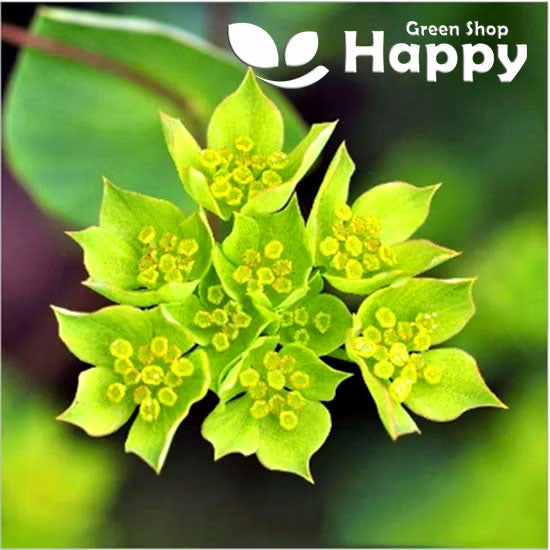
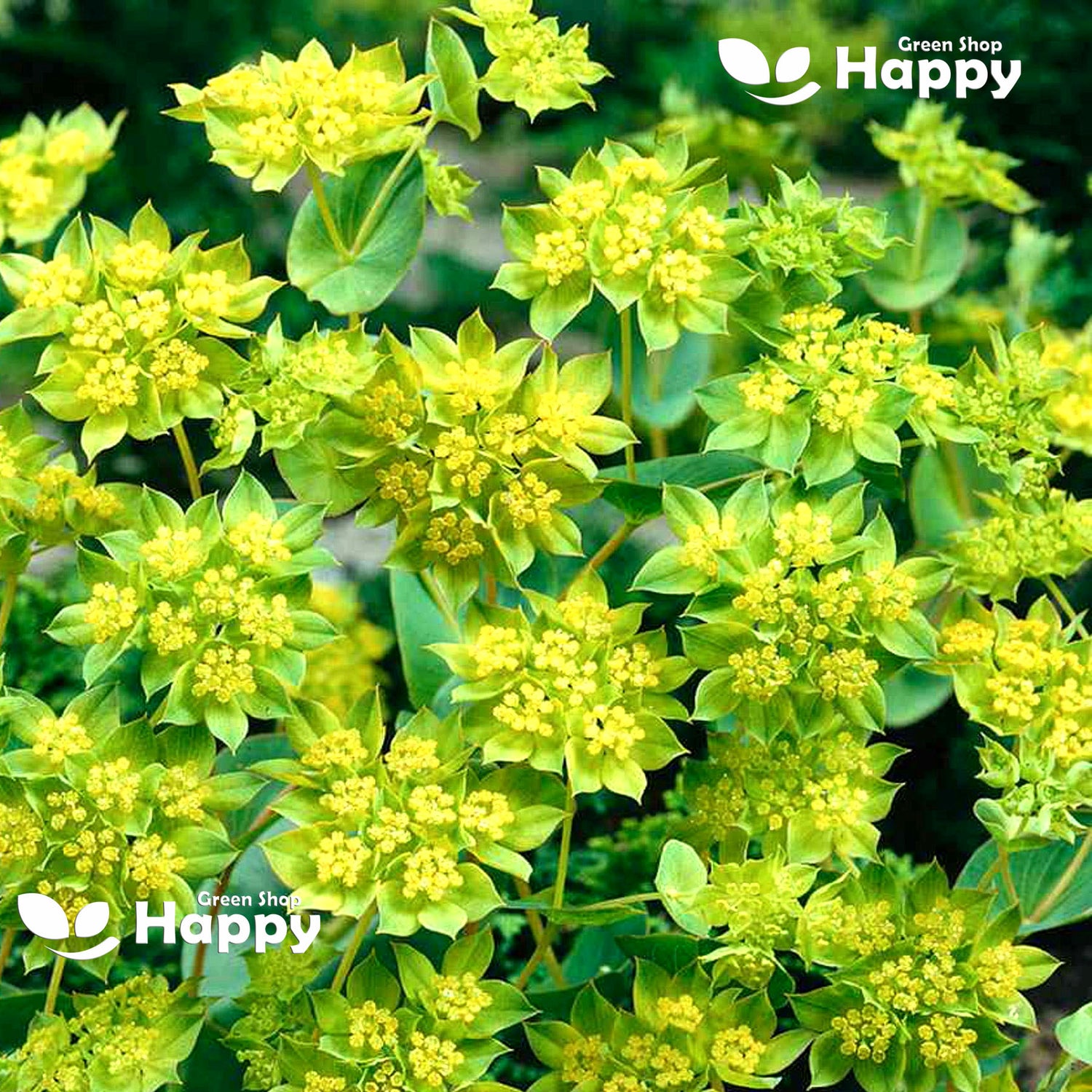
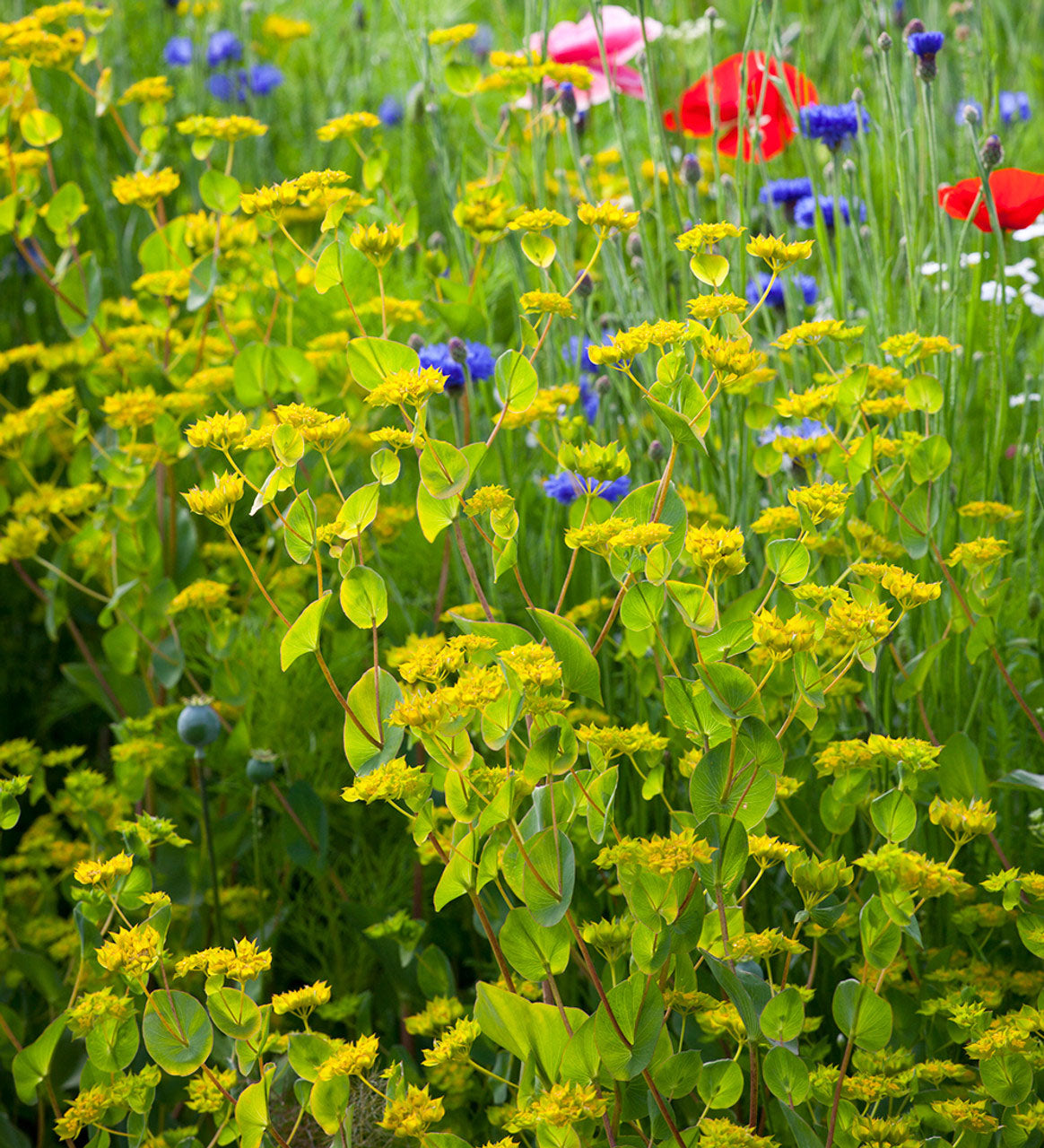
Hare’s Ear Seeds (Bupleurum rotundifolium ‘Griffithii’)
Add unique texture and vibrant color to your garden with Hare’s Ear (Bupleurum rotundifolium ‘Griffithii’). This annual produces clusters of bright green, airy umbels above fine foliage, creating a striking contrast in borders, cutting gardens, and wildflower meadows. Hardy and easy to grow, it attracts pollinators and adds architectural interest to your garden.
How to Grow
-
Sow directly outdoors in spring after the last frost.
-
Use well-drained soil in full sun.
-
Scatter seeds thinly and cover lightly with soil.
-
Keep soil moist until germination (10–14 days).
-
Thin seedlings to 25–30 cm apart once established.
-
Cut flowers regularly to encourage continued blooming.
Key Features
-
Airy green umbels for a unique garden texture
-
Hardy annual, easy to grow and long-flowering
-
Excellent for borders, cutting gardens, and meadows
-
Attracts bees, butterflies, and other pollinators
-
Architectural foliage adds interest to plantings
Ideal For
-
Flower borders and cottage gardens
-
Cutting gardens for fresh bouquets
-
Wildflower-style meadows and naturalized areas
-
Pollinator-friendly landscapes
Sowing
-
Best time: Spring outdoors
-
Germination: 10–14 days
-
Sow thinly, cover lightly, and keep soil moist
-
Prefers full sun and well-drained soil
Quick Tip
-
For a longer display, sow in successive batches every 2–3 weeks during spring.

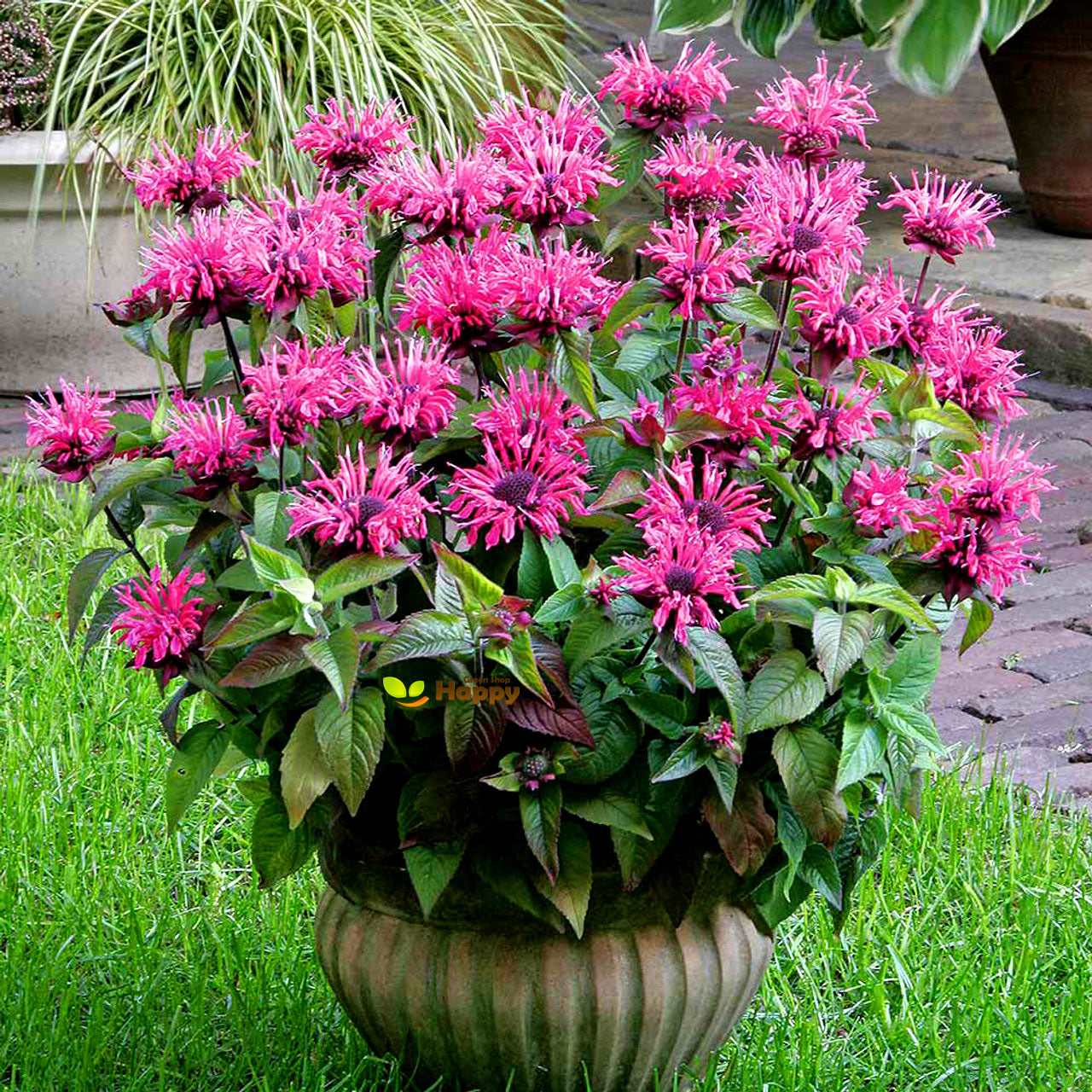

HERB BEE BALM SEEDS (Monarda didyma)
Add vibrant color and fragrance to your garden with Herb Bee Balm. This perennial produces striking red, pink, or purple flowers atop aromatic foliage, attracting bees, butterflies, and hummingbirds. Easy to grow and low-maintenance, it’s perfect for borders, beds, and pollinator-friendly gardens.
Why Grow "Herb Bee Balm"
-
Showy, fragrant flowers in red, pink, or purple
-
Attracts bees, butterflies, and hummingbirds
-
Low-maintenance, long-flowering perennial
-
Enhances borders, beds, and pollinator gardens
Key Features
-
Type: Perennial (Monarda didyma)
-
Height: 60–90 cm
-
Flowering: Summer (June–September)
-
Position: Full sun to partial shade
-
Uses: Borders, flower beds, pollinator gardens, containers
Ideal For
-
Adding vibrant color and fragrance to borders and beds
-
Pollinator-friendly gardens
-
Containers and patio planting
-
Beginner gardeners seeking easy-to-grow perennials
Sowing & Growing
-
Sow indoors: 6–8 weeks before the last frost
-
Sow outdoors: After frost danger has passed
-
Germination: 10–20 days
-
Space seedlings: 30–40 cm apart
-
Prefers well-drained soil and full sun for best flowering


Herb Corn Salad Seeds (Valerianella locusta)
Also known as Lamb’s Lettuce or Mâche, Corn Salad is a fast-growing leafy green with soft, nutty-flavored leaves. Popular in European cuisine, it’s perfect for salads, sandwiches, and as a tender garnish. Hardy and cold-tolerant, it thrives in cooler months, making it an excellent choice for autumn and winter harvests. Easy to grow and highly nutritious, it’s a must-have for year-round salads.
How to Grow
-
Sow directly outdoors from March to May, and again from August to October.
-
Prefers fertile, well-drained soil in full sun or partial shade.
-
Sow thinly, 1 cm deep, in rows 20 cm apart.
-
Thin seedlings to 10 cm spacing for healthy plants.
-
Harvest young leaves as needed for cut-and-come-again cropping.
Key Features
-
Tender, nutty-flavored leaves
-
Hardy and cold-tolerant, ideal for winter salads
-
Quick and easy to grow
-
Perfect for cut-and-come-again harvesting
-
Highly nutritious and versatile in the kitchen
Ideal For
-
Autumn and winter vegetable gardens
-
Fresh salads and sandwich fillings
-
Containers, raised beds, and small gardens
-
Gardeners seeking a reliable cool-season green
Sowing
-
Best time: March–May, August–October
-
Depth: 1 cm
-
Spacing: 10 cm between plants, 20 cm between rows
-
Position: Full sun or partial shade
-
Harvest: October to March
Quick Tip
-
Succession sow every few weeks for a continuous supply of fresh leaves throughout the cooler seasons.
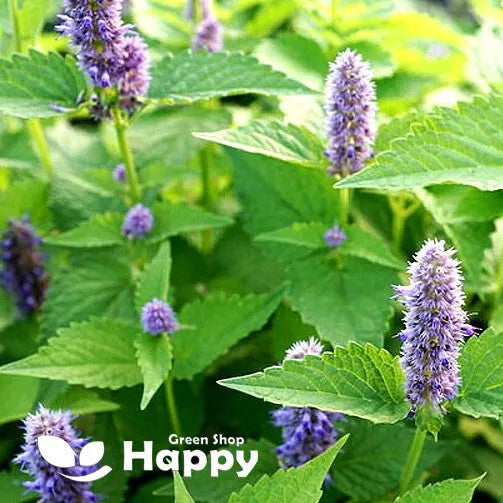
Peppermint – Seeds (Mentha piperita)
Peppermint is a vigorous, aromatic perennial herb with refreshing, minty leaves. Known for its intense flavor and fragrance, it is perfect for teas, desserts, cocktails, sauces, and herbal remedies. Easy to grow and highly versatile, Peppermint thrives in containers, garden beds, and herb gardens, making it a must-have for any culinary or medicinal collection.
How to Grow
-
Sow seeds indoors from February to April, lightly covering with soil.
-
Maintain 18–22°C until germination.
-
Transplant seedlings outdoors after the last frost in a sunny or partially shaded spot.
-
Prefers moist, well-drained soil and regular watering.
-
Trim regularly to encourage bushy growth and prevent flowering.
Key Features
-
Aromatic, perennial herb with strong minty flavor
-
Fast-growing and easy to cultivate
-
Ideal for teas, desserts, sauces, and cocktails
-
Thrives in containers and garden beds
-
Suitable for culinary and medicinal use
Ideal For
-
Fresh and dried herbal teas, desserts, and beverages
-
Herb gardens, containers, and small spaces
-
Gardeners seeking aromatic and multipurpose herbs
Sowing & Harvest
-
Sow: February to April
-
Depth: Lightly covered
-
Harvest: May to October
Quick Tip
-
Regular harvesting of leaves encourages vigorous growth and keeps the plant flavorful.


Herb Sage – Seeds
(Salvia officinalis)
Herb Sage is a hardy perennial herb prized for its aromatic leaves and culinary versatility. Perfect for seasoning meats, soups, and sauces, its gray-green foliage also adds texture and fragrance to herb gardens. Easy to grow and drought-tolerant once established, it attracts pollinators and enhances both edible and ornamental plantings.
Why Grow Herb Sage?
-
Aromatic leaves for culinary and medicinal use
-
Hardy perennial, drought-tolerant once established
-
Attracts bees and pollinators
-
Adds texture and fragrance to gardens
Key Features
-
Type: Perennial herb
-
Height: 30–60 cm
-
Flowers: Blue-purple, late spring to summer
-
Position: Full sun
-
Soil: Well-drained, moderately fertile
Ideal For
-
Herb and culinary gardens
-
Pollinator-friendly plantings
-
Containers, borders, and rockeries
-
Perennial garden beds
Sowing & Growing
-
Sow indoors: February–April in seed trays
-
Sow outdoors: April–May directly in prepared soil
-
Germination: 14–21 days at 18–20°C
-
Spacing: 25–30 cm apart
-
Care: Moderate watering; prune after flowering to encourage fresh growth
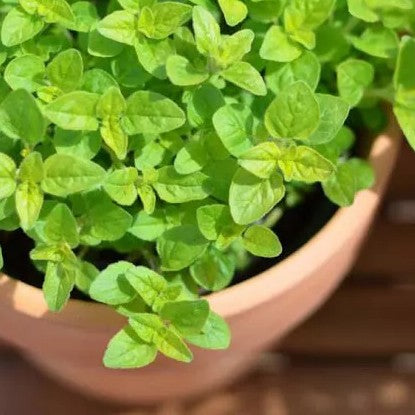

Sweet Marjoram – Seeds (Tender Perennial Aromatic)
Sweet Marjoram is a fragrant, tender perennial herb prized for its delicate, sweet flavor. Perfect for seasoning soups, sauces, salads, and roasted dishes, it adds a subtle aromatic touch to your culinary creations. Compact and easy to grow, Sweet Marjoram is ideal for garden beds, containers, and herb gardens.
How to Grow
-
Sow seeds indoors from February to April, lightly covering with soil.
-
Maintain 18–22°C until germination.
-
Transplant seedlings outdoors after the last frost in a sunny, sheltered spot.
-
Prefers well-drained soil and regular watering.
-
Trim regularly to encourage bushy growth and prevent flowering.
Key Features
-
Tender perennial aromatic herb
-
Sweet, delicate flavor for culinary use
-
Compact, bushy growth habit
-
Ideal for garden beds, containers, and herb gardens
-
Perfect for fresh use or drying
Ideal For
-
Flavoring soups, sauces, and roasted dishes
-
Gardeners seeking aromatic, easy-to-grow herbs
-
Kitchen herb collections and container gardening
Sowing & Harvest
-
Sow: February to April
-
Depth: Lightly covered
-
Harvest: May to October
Quick Tip
-
Regularly snip leaves to encourage fresh growth and prevent the plant from flowering too early.
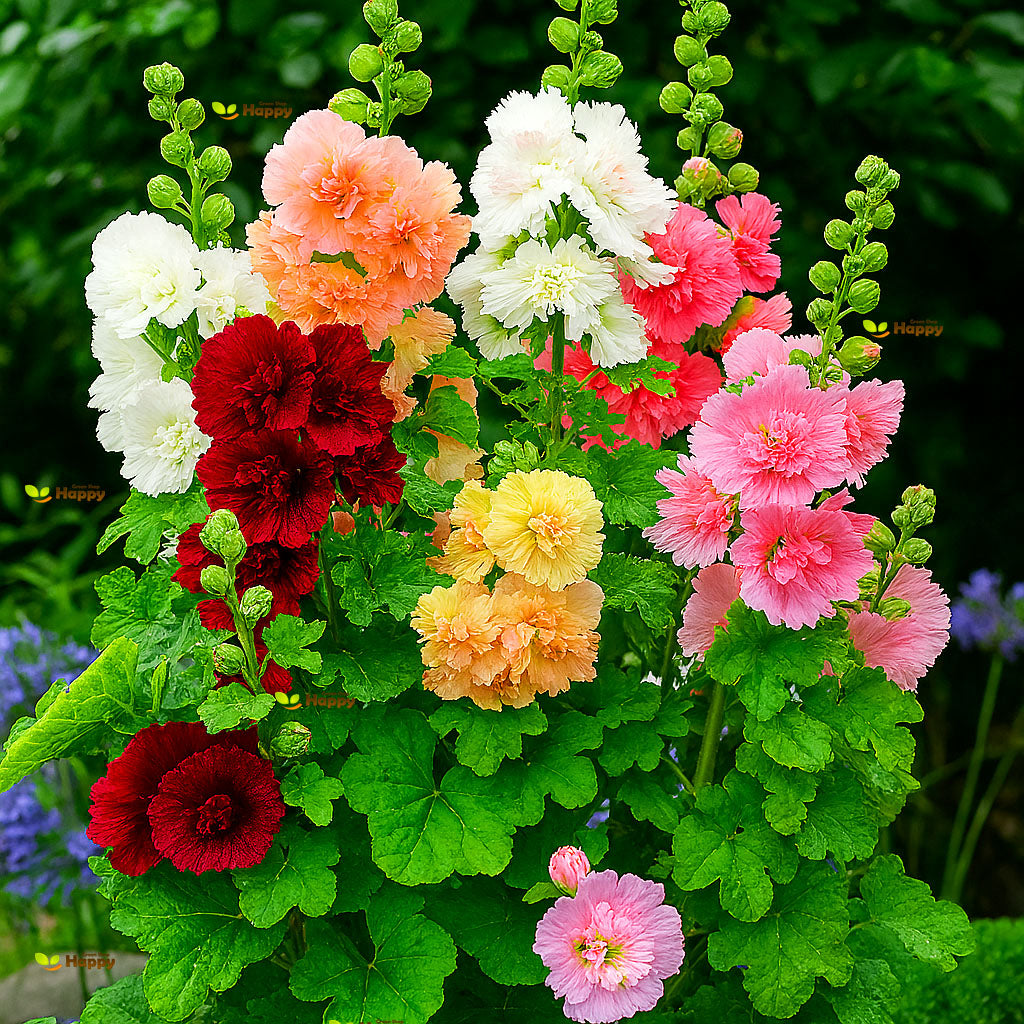
Hollyhock ‘Majorette Double’ Mix – Seeds (Althaea rosea)
The Hollyhock ‘Majorette Double’ Mix is a stunning dwarf variety producing fully double flowers in a wide range of colors, including pink, red, yellow, and white. Compact and bushy, it is perfect for smaller gardens, borders, and containers while still giving that classic cottage garden charm.
Why Grow ‘Majorette Double’?
-
Fully double blooms in a vibrant color mix
-
Shorter, dwarf habit compared to traditional tall hollyhocks
-
Long summer flowering season
-
Attracts bees and pollinators
Key Features
-
Type: Half-hardy biennial (often flowers in the first year)
-
Height: 60–80 cm
-
Flowering: June–September
-
Position: Full sun, well-drained soil
-
Uses: Borders, containers, cottage garden plantings
Ideal For
-
Smaller gardens and courtyards
-
Adding vertical interest without excessive height
-
Pollinator-friendly spaces
Sowing & Growing
-
Sow indoors: February–April in trays or pots
-
Sow outdoors: May–June directly in soil
-
Germination: 14–21 days at 18–20°C
-
Transplant seedlings 40–50 cm apart
-
Deadhead faded flowers for extended blooming
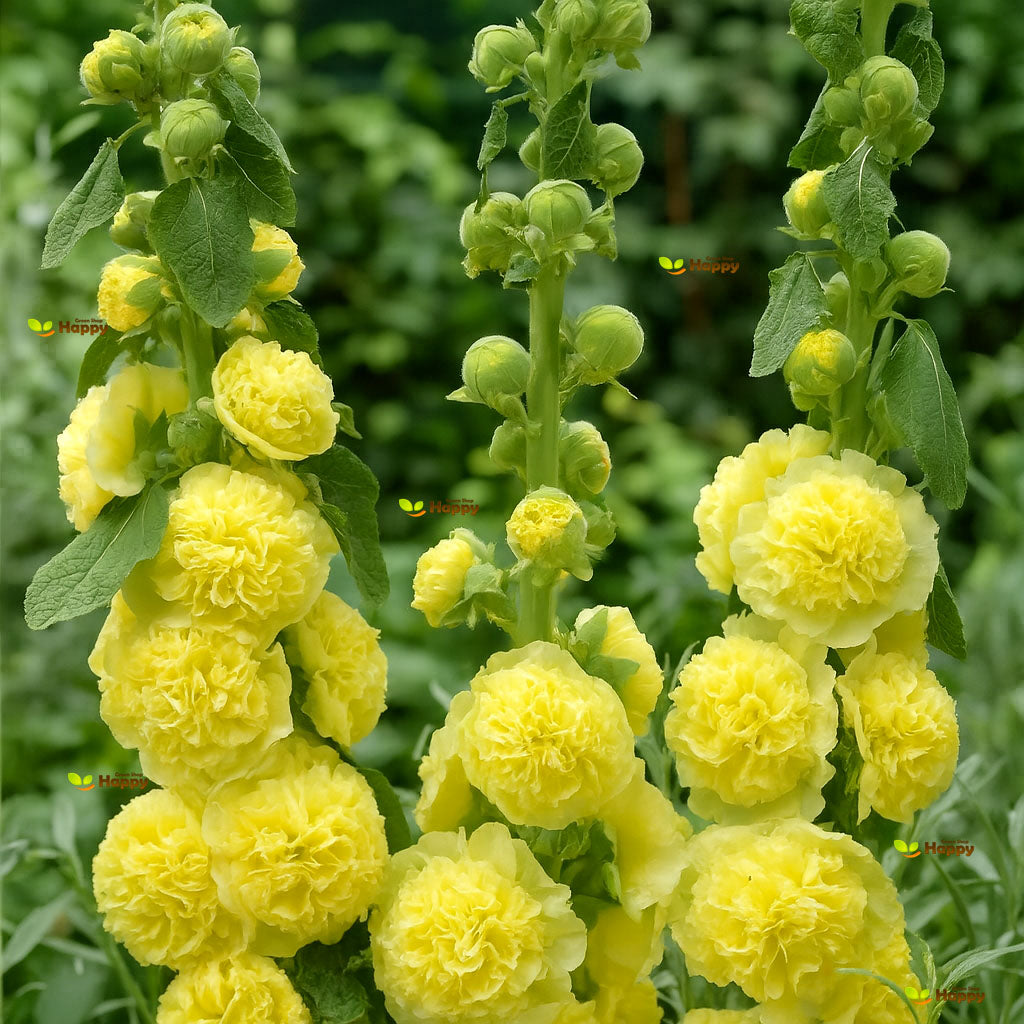
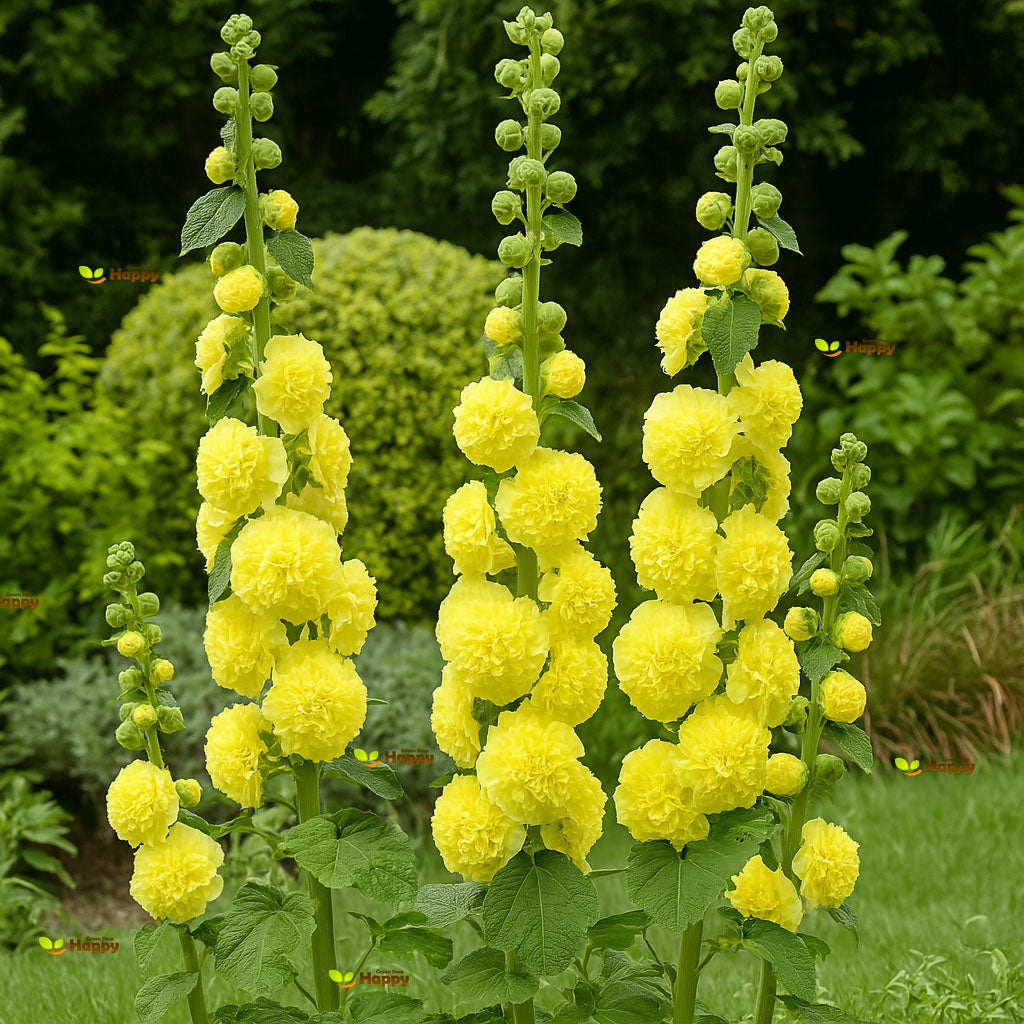
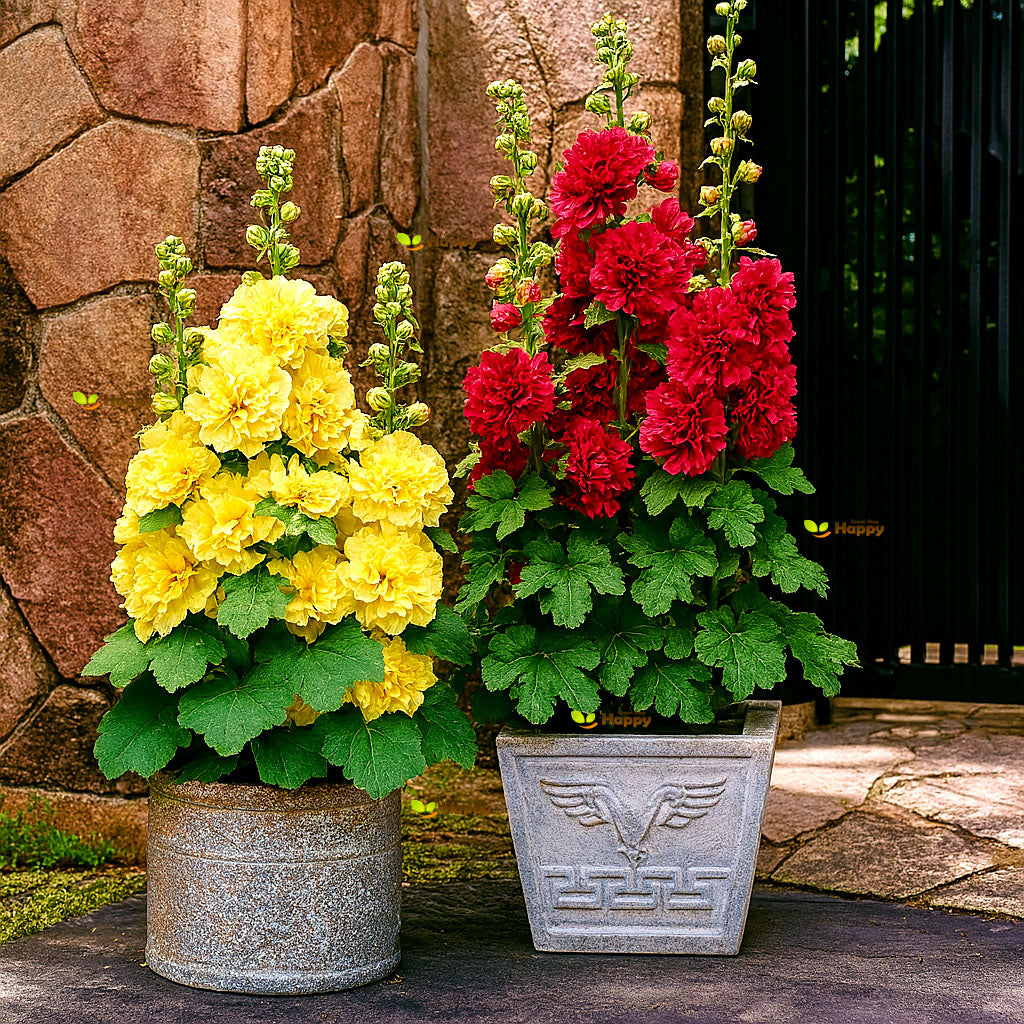
HOLLYHOCK ‘CHATERS DOUBLE YELLOW’ SEEDS (Althaea rosea)
Add towering elegance and cheerful color to your garden with Hollyhock ‘Chaters Double Yellow’. This classic biennial produces large, double yellow flowers on tall, sturdy stems, creating a stunning vertical display in borders and cottage gardens. Easy to grow and long-flowering, it attracts pollinators while enhancing garden charm.
Why Grow "Chaters Double Yellow"
-
Large, double yellow flowers
-
Tall, sturdy stems for vertical impact
-
Long-flowering and low-maintenance
-
Attracts bees and butterflies
Key Features
-
Type: Biennial (Althaea rosea)
-
Height: 150–200 cm
-
Flowering: Summer (June–August)
-
Position: Full sun
-
Uses: Borders, cottage gardens, tall displays, pollinator-friendly
Ideal For
-
Adding height and color to garden borders
-
Cottage and informal garden designs
-
Attracting pollinators
-
Cut flowers for arrangements
Sowing & Growing
-
Sow indoors: 6–8 weeks before last frost
-
Sow outdoors: After frost danger has passed
-
Germination: 14–21 days
-
Space seedlings: 40–50 cm apart
-
Full sun and well-drained soil for best flowering
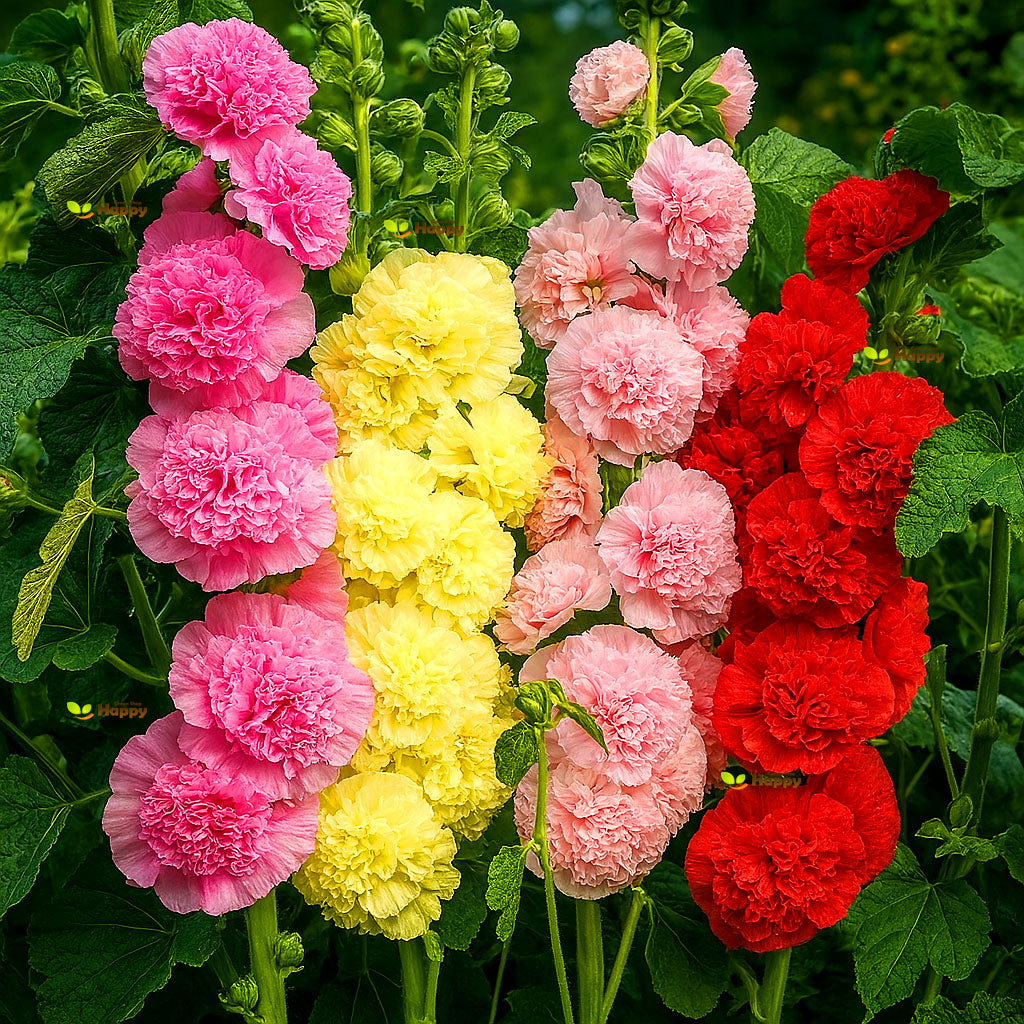
Hollyhock ‘Chaters Double Triumph Mix’ Seeds (Althaea rosea)
A true cottage garden classic, the Hollyhock ‘Chaters Double Triumph Mix’ produces tall, stately flower spikes adorned with large, fully double blooms in a rich blend of colors – from soft pastels to vibrant shades. These majestic perennials (often grown as biennials) create a dramatic vertical accent at the back of borders, alongside walls, or in wildflower-style gardens.
What Makes It Special
-
Stunning double blooms in a wide range of colors
-
Impressive tall spires up to 1.8–2.5 m high
-
Attracts bees, butterflies, and pollinators
-
A long-standing favorite in cottage and traditional gardens
Key Features
-
Botanical name: Althaea rosea
-
Common name: Hollyhock Chaters Double Triumph Mix
-
Seed count: Approx. per pack (customizable)
-
Height/Spread: 180–250 cm tall, 50–60 cm spread
-
Position: Full sun; well-drained fertile soil
-
Flowering period: July – September (second year from sowing)
-
Lifespan: Hardy biennial/perennial
Ideal For
-
Cottage and traditional garden borders
-
Planting against walls and fences
-
Pollinator-friendly gardens
-
Creating dramatic vertical height in displays
Sowing Instructions
-
When to sow: Indoors March–May or directly outdoors May–June.
-
How to sow:
-
Sow seeds thinly in trays or pots of moist seed compost, cover lightly.
-
Keep at 15–20°C for germination (14–21 days).
-
Transplant seedlings when large enough, spacing 45–60 cm apart.
-
-
Care: Provide support in exposed areas. Deadhead faded flowers to encourage further blooming.
Showing 414/914


