
Sort by:
869 products
869 products

Pumpkin 'Jack o'Lantern' Seeds (Cucurbita pepo)
Create the perfect Halloween display with Pumpkin 'Jack o'Lantern' (Cucurbita pepo). This classic variety produces medium-sized, round fruits with smooth, deep-orange skin that’s ideal for carving. In addition to being a festive favorite, the sweet, fine-textured flesh is excellent for pies, soups, and roasting, making it both decorative and delicious.
How to Grow
-
Sow seeds indoors in late spring or directly outdoors after the last frost.
-
Use rich, well-drained soil in full sun.
-
Sow 2–3 cm deep, either in pots indoors or in mounds outdoors.
-
Transplant seedlings or thin outdoor sowings to 90–120 cm apart.
-
Water well and feed regularly for large, healthy fruits.
Key Features
-
Classic pumpkin variety for carving and cooking
-
Produces round, deep-orange fruits
-
Medium size, perfect for Halloween lanterns
-
Sweet, fine-textured flesh for baking and soups
-
Decorative and edible in equal measure
Ideal For
-
Halloween carving and autumn displays
-
Homemade pies, soups, and roasts
-
Garden beds and allotments
-
Families and festive gardeners
Sowing
-
Best time: Indoors late spring or outdoors after frost
-
Depth: 2–3 cm
-
Spacing: 90–120 cm apart
-
Prefers full sun and rich, well-drained soil
Quick Tip
-
Harvest pumpkins when the skin is firm and orange, and cure them in a dry, sunny spot to improve storage life.
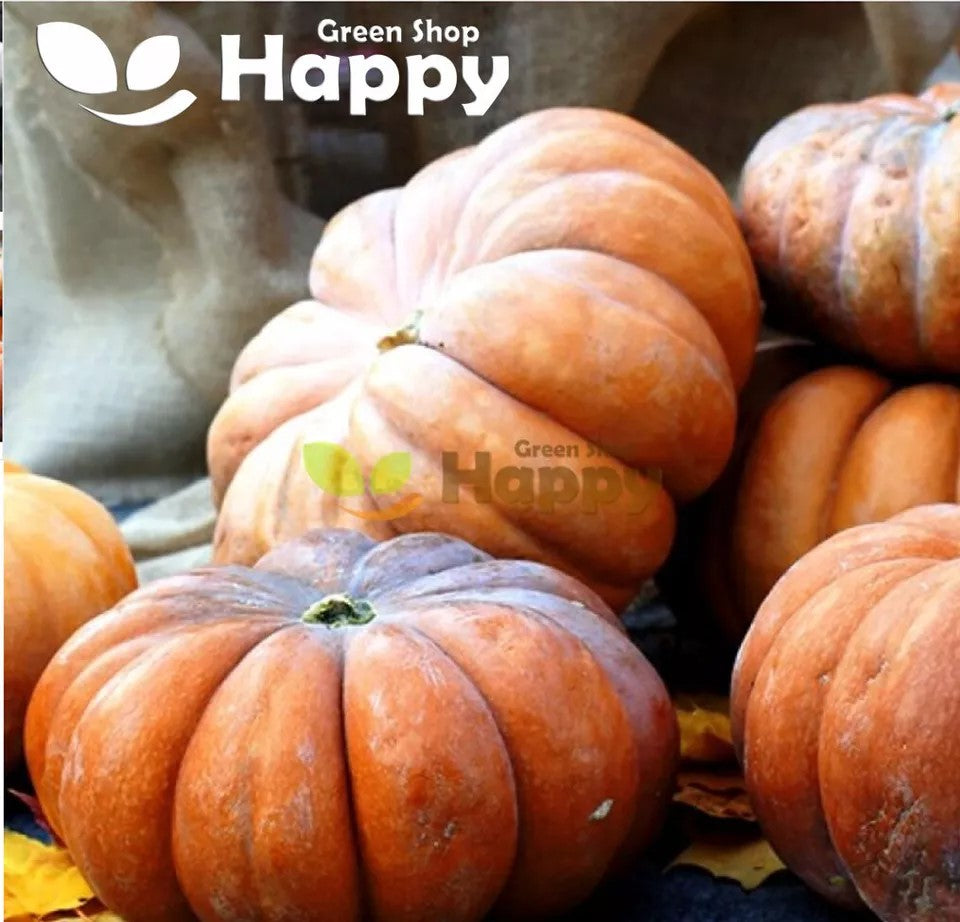
Pumpkin 'Muscade de Provence' – Seeds (Cucurbita moschata)
The Pumpkin 'Muscade de Provence' is a traditional French winter squash renowned for its rich, nutty flavor and smooth, orange flesh. Producing medium to large, round to slightly flattened fruits, this variety is perfect for soups, roasting, baking, and preserves. Its excellent storage qualities make it ideal for autumn harvests and long-term use.
How to Grow
-
Sow seeds indoors from April or directly outdoors from May once the soil is warm.
-
Plant 2–3 seeds per hole, 2–3 cm deep, thinning to the strongest seedling.
-
Space plants 90–120 cm apart in sunny, fertile, well-drained soil.
-
Water consistently and mulch to retain moisture.
-
Harvest fruits when the skin is hard and deep orange.
Key Features
-
Rich, nutty-flavored orange flesh
-
Medium to large, round to slightly flattened fruits
-
Excellent storage qualities for winter use
-
Ideal for soups, roasting, baking, and preserves
-
Vigorous, high-yielding plants
Ideal For
-
Autumn harvests and long-term storage
-
Culinary use: soups, roasting, and baking
-
Home gardens, allotments, and specialty pumpkin collections
Sowing & Harvest
-
Sow: April to May
-
Spacing: 90–120 cm between plants
-
Harvest: September to October
Quick Tip
-
Leave pumpkins on the vine until the skin hardens and the stem starts to brown for optimal storage.
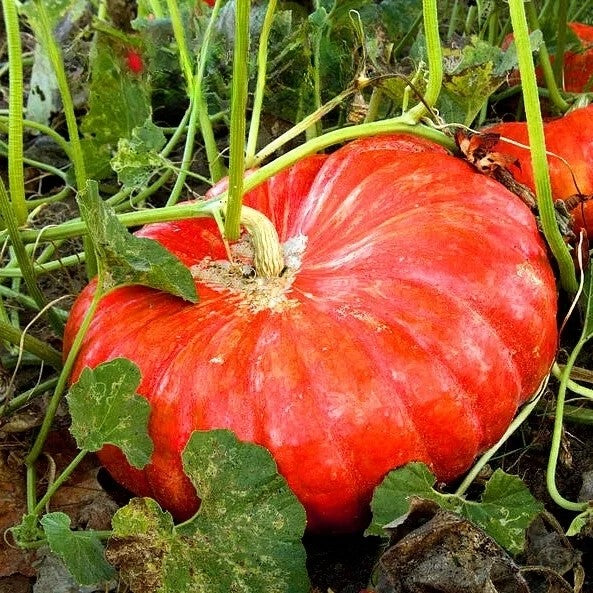
Pumpkin 'Rouge d'Etampes' – Seeds (Cucurbita pepo)
The Pumpkin 'Rouge d'Etampes', also known as the Cinderella Pumpkin, is a stunning French heirloom variety prized for its large, flattened, deeply ribbed fruits with a vivid red-orange skin. Traditionally grown in the Paris region, it is famous for both its striking ornamental appeal and its delicious, sweet, fine-grained flesh.
Perfect for roasting, soups, pies, and preserves, it’s also a favourite for autumn displays thanks to its dramatic shape and colour.
How to Grow
-
Sow indoors: April – May, in pots
-
Sow outdoors: Late May – June, after last frost
-
Planting distance: 100 cm apart
-
Soil: Rich, fertile, well-drained soil with added compost or manure
-
Position: Full sun
-
Care: Keep well-watered, mulch to retain soil moisture, and provide space for trailing vines
Key Features
-
Traditional French heirloom pumpkin
-
Beautiful flattened, ribbed, red-orange fruits
-
Excellent sweet flavour for roasting, soups, and pies
-
Dual purpose – culinary and ornamental
-
Large fruits with good yields
Sowing & Harvest
-
Sow: April – June
-
Harvest: September – October

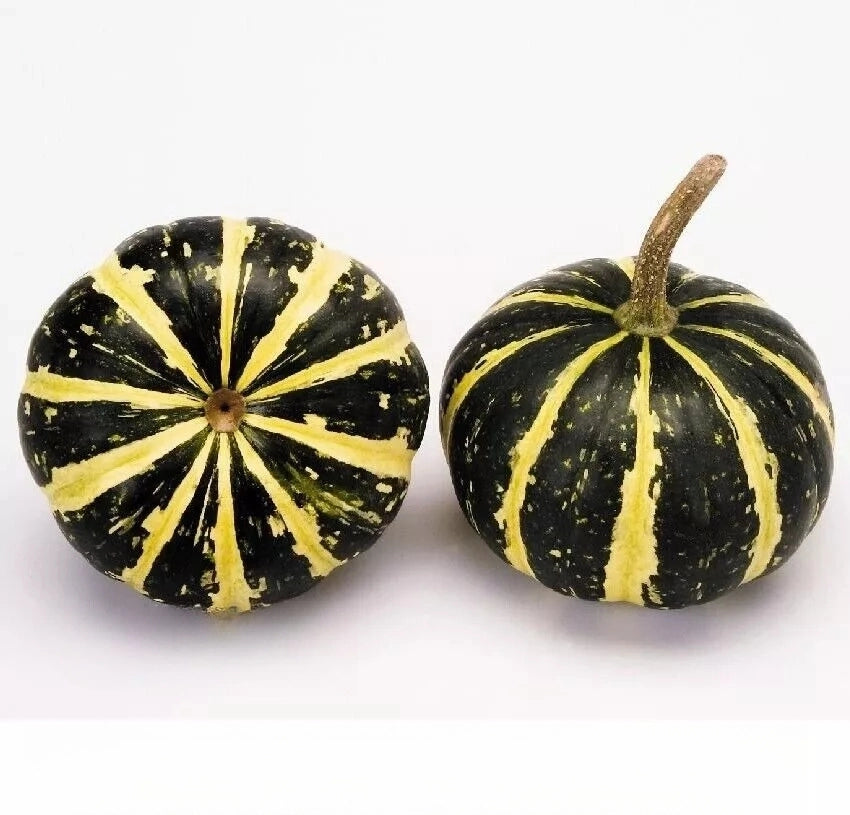
Pumpkin ‘Gourd Flat Striped’ Seeds (Cucurbita pepo)
Pumpkin ‘Gourd Flat Striped’ is an ornamental pumpkin variety with unique flat, round fruits striped in vibrant shades of green, cream, and orange. Ideal for fall displays, autumn decorations, and garden aesthetics, this easy-to-grow variety adds character to any harvest garden. Hardy and fast-growing, it thrives in sunny, well-drained soil.
What Makes It Special
-
Unique flat, round fruits with attractive stripes
-
Perfect for ornamental use, autumn displays, and decorations
-
Hardy, easy to grow, and fast-maturing
Key Features
-
Botanical name: Cucurbita pepo
-
Annual
-
Height: Vining, 2–3 m spread
-
Fruit: Flat, striped, ornamental
Ideal For
-
Autumn and harvest decorations
-
Garden display and ornamental planting
-
Pollinator-friendly vegetable gardens
Sowing
-
Sow indoors Mar–Apr or outdoors after last frost
-
Cover seeds lightly with soil
-
Germination: 7–14 days at 20–25°C
-
Space plants 80–100 cm apart
-
Harvest fruits 90–100 days after sowing


🎃 Cucurbita pepo ‘Baby Bear’ – Compact Pumpkin with Perfect Small Fruits for Autumn Displays
‘Baby Bear’ is a popular mini pumpkin variety bred for producing uniform, small-sized fruits with a classic pumpkin shape. The bright orange pumpkins are smooth, well-rounded and typically weigh 0.5–1 kg (1–2 lb), making them ideal for decorative use, children’s growing projects and autumn displays.
Plants are compact and bush-type, requiring much less space than traditional trailing pumpkins, which makes ‘Baby Bear’ especially suitable for small gardens, raised beds and containers. The fruits also have edible flesh and can be used for simple cooking or baking, though they are mainly grown for ornamental purposes.
Key Features
● Small, uniform pumpkins ideal for decoration
● Compact bush plants – space-saving variety
● Bright orange fruits with classic pumpkin shape
● Suitable for gardens, raised beds and containers
● Easy to grow and reliable performer
How to Sow & Grow Pumpkin ‘Baby Bear’ (UK)
Sow indoors: IV (April)
Transplant outdoors: V–VI (May–June) after last frost
Direct outdoors: V–VI (May–June) in warm soil
Harvest: IX–X (September–October)
Life cycle: Annual
Germination temperature: 18–24 °C (64–75 °F)
Average germ time: 7–10 days
Depth: 2–3 cm (1 in)
Light required: Yes
Moisture: Regular watering
Environment: Full sun
Soil type: Fertile, well-drained soil
Plant spacing: 60–80 cm (2–2.5 ft)
Fruit size: approx. 0.5–1 kg (1–2 lb)
Sowing & Growing Tips (variety-specific)
● Bush habit makes this variety easy to manage.
● Feed regularly to support steady fruit production.
● Harvest when fruits are fully coloured and rind is hard.
● Lift fruits off damp soil to prevent rot.
● Excellent choice for decorative autumn harvests.

🎃 Cucurbita maxima ‘Pacific Giant’ – Exhibition Giant Pumpkin for Extreme Size
‘Pacific Giant’ is a classic giant pumpkin variety bred specifically for producing exceptionally large fruits, making it a popular choice for exhibitions, competitions and growers aiming for maximum size. With vigorous growth and long trailing vines, this variety is capable of producing massive pumpkins when given rich soil, ample space and consistent feeding.
The fruits are typically large, round to slightly flattened, with a smooth orange rind. While mainly grown for size rather than flavour, ‘Pacific Giant’ is an impressive centrepiece in the garden and a favourite among competitive growers.
Key Features
● Giant pumpkin variety bred for extreme size
● Ideal for shows, competitions and exhibitions
● Very vigorous growth with long trailing vines
● Large, round to flattened fruits
● Requires space, feeding and regular watering
How to Sow & Grow Pumpkin ‘Pacific Giant’ (UK)
Sow indoors: IV (April)
Transplant outdoors: V–VI (May–June) after last frost
Direct outdoors: V–VI (May–June) once soil is warm
Harvest: IX–X (September–October)
Life cycle: Annual
Germination temperature: 20–25 °C (68–77 °F)
Average germ time: 7–10 days
Depth: 2–3 cm (1 in)
Light required: Yes
Moisture: Heavy, regular watering
Environment: Full sun
Soil type: Very fertile, deep soil rich in organic matter
Plant spacing: 120–150 cm (4–5 ft)
Growth habit: Long trailing vines
Sowing & Growing Tips (variety-specific)
● Prepare soil with plenty of compost or well-rotted manure.
● Allow only 1–2 fruits per plant to maximise size.
● Feed regularly with a high-potassium fertiliser during fruit development.
● Turn fruits gently during growth to improve shape.
● Lift fruits onto straw or boards to prevent rot.

Punching Balls Pink – Seeds (Polygonum capitatum)
Punching Balls Pink (Polygonum capitatum) is a charming perennial known for its dense, globe-shaped clusters of vibrant pink flowers. Blooming from late spring to early autumn, it creates a colorful, eye-catching display in borders, rockeries, and cottage gardens. Low-maintenance and easy to grow, this variety attracts pollinators and adds a bold, textured element to any garden space.
Why Grow "Punching Balls Pink"
-
Globe-shaped clusters of bright pink flowers
-
Long flowering season from late spring to early autumn
-
Hardy, low-maintenance perennial
-
Pollinator-friendly and visually striking
Key Features
-
Type: Perennial (Polygonum capitatum)
-
Height: 40–60 cm
-
Flowering: Late spring to early autumn
-
Position: Full sun to partial shade
-
Uses: Borders, rockeries, cottage gardens, pollinator-friendly planting
Ideal For
-
Bold, textured garden displays
-
Borders and rockeries
-
Cottage-style gardens
-
Pollinator-friendly planting schemes
Sowing & Growing
-
Sow indoors: February–April in trays or pots
-
Sow outdoors: April–May after frost
-
Germination: 10–20 days at 18–22°C
-
Thin seedlings 30–40 cm apart
-
Prefers well-drained soil in full sun to partial shade
-
Water moderately until established
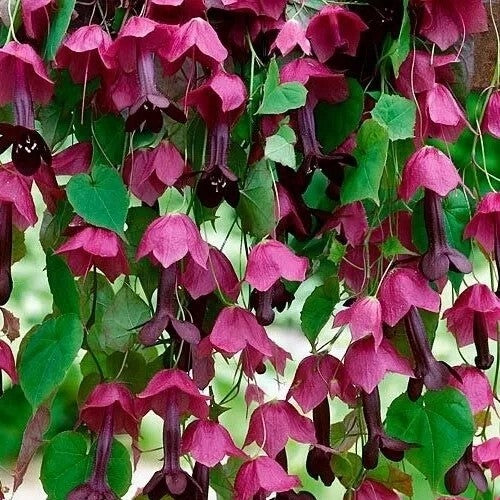
Purple Bell Vine – Seeds (Rhodochiton atrosanguineus)
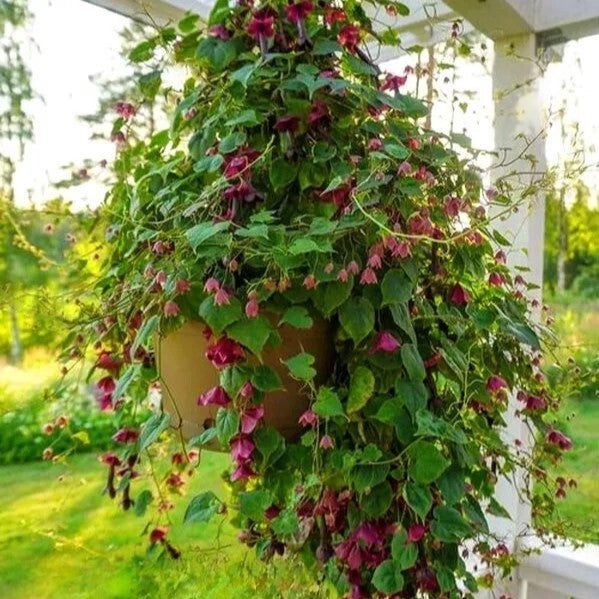
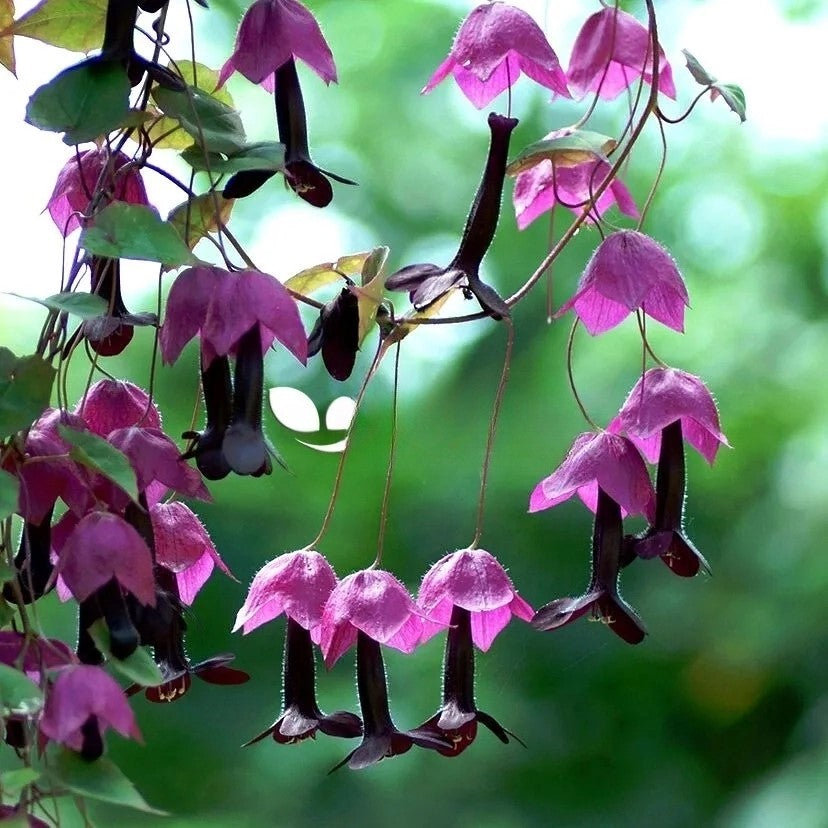
The Purple Bell Vine is a striking climber admired for its exotic, lantern-like flowers. Each bloom features a rosy-purple bell with deep, maroon-black tubular centers, hanging gracefully against lush green, heart-shaped foliage. Fast-growing and elegant, it adds a dramatic touch to arches, trellises, pergolas, or hanging baskets. Native to Mexico, this tender perennial is usually grown as an annual in cooler climates.
What Makes It Special
-
Unique pendant bell-shaped flowers with rich colors
-
Long flowering season from summer to autumn
-
Ideal for vertical gardens and decorative screening
-
Can also be grown in containers for patios and balconies
Key Features
-
Botanical name: Rhodochiton atrosanguineus
-
Common name: Purple Bell Vine, Purple Bell Flower
-
Seed count: Approx. seeds per pack
-
Height/Spread: Climbs 3–4 m with support
-
Position: Full sun or light partial shade; well-drained soil
-
Flowering period: June to October
Ideal For
-
Trellises, arches, and fences
-
Vertical garden displays
-
Patio containers and hanging baskets
-
Exotic or tropical-style gardens
Sowing Instructions
-
When to sow: Indoors February–April
-
How to sow:
-
Sow on the surface of moist seed compost, pressing gently without covering (light aids germination)
-
Keep at 18–22°C and germination takes 21–30 days
-
-
Transplanting: Pot on seedlings when large enough and harden off before planting outside after last frost
-
Care: Provide climbing support; water regularly and feed for abundant flowering
Purple Coneflower 'Starlight' – Seeds
(Echinacea purpurea)
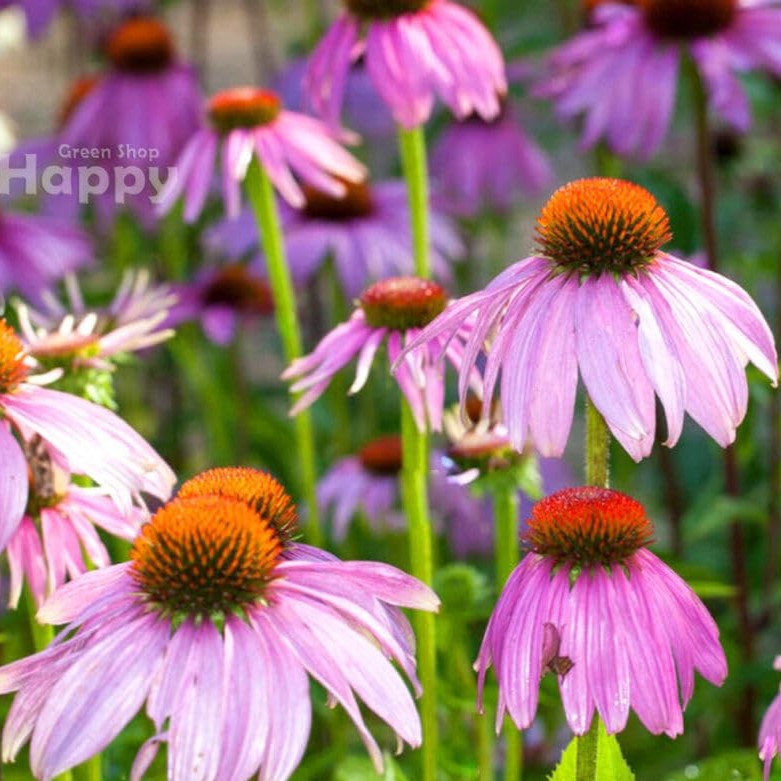
Purple Coneflower 'Starlight' is a hardy perennial known for its striking lavender-purple petals surrounding a prominent orange-brown central cone. Its long-lasting blooms attract pollinators like bees and butterflies, while its robust, upright growth makes it a standout in borders, wildflower meadows, and perennial gardens. This variety is low-maintenance and drought-tolerant, perfect for sustainable planting.
Key Features
-
Type: Perennial
-
Height: 60–90 cm
-
Spread: 40–50 cm
-
Flowering: July–September
-
Position: Full sun to partial shade
-
Soil: Well-drained, moderately fertile
Ideal For
-
Perennial borders and cottage gardens
-
Pollinator-friendly planting
-
Cut flower arrangements
-
Naturalized or meadow-style gardens
Sowing & Growing
-
Sow indoors: February–April at 18–22°C
-
Sow outdoors: April–May, directly in soil
-
Germination: 14–21 days
-
Thin seedlings to 40–50 cm apart
-
Mulch and water moderately; low-maintenance once established
Showing 603/869


