
Sort by:
51 products
51 products


Dianthus ‘Sweetness’ Mix Seeds (Dianthus plumarius)
A fragrant and charming perennial, Dianthus ‘Sweetness’ Mix produces clusters of double, colorful blooms in shades of pink, red, and white. Compact and hardy, it’s perfect for borders, rock gardens, and containers, providing long-lasting color and sweet fragrance from late spring through summer.
What Makes It Special
-
Fragrant, double blooms in a mix of pink, red, and white
-
Compact, hardy, and ideal for small garden spaces
-
Long flowering season with eye-catching colors
Key Features
-
Botanical name: Dianthus plumarius
-
Hardy perennial
-
Height: 15–20 cm (6–8 in)
-
Bloom time: Late spring to summer
Ideal For
-
Borders, rock gardens, and container plantings
-
Fragrant garden displays
-
Edging and small garden spaces
Sowing
-
Sow indoors Feb–Apr or outdoors Mar–May
-
Cover lightly with soil and keep moist
-
Germination: 14–21 days at 15–20°C
-
Thin seedlings 15–20 cm apart
-
Flowers in the first or second season after sowing
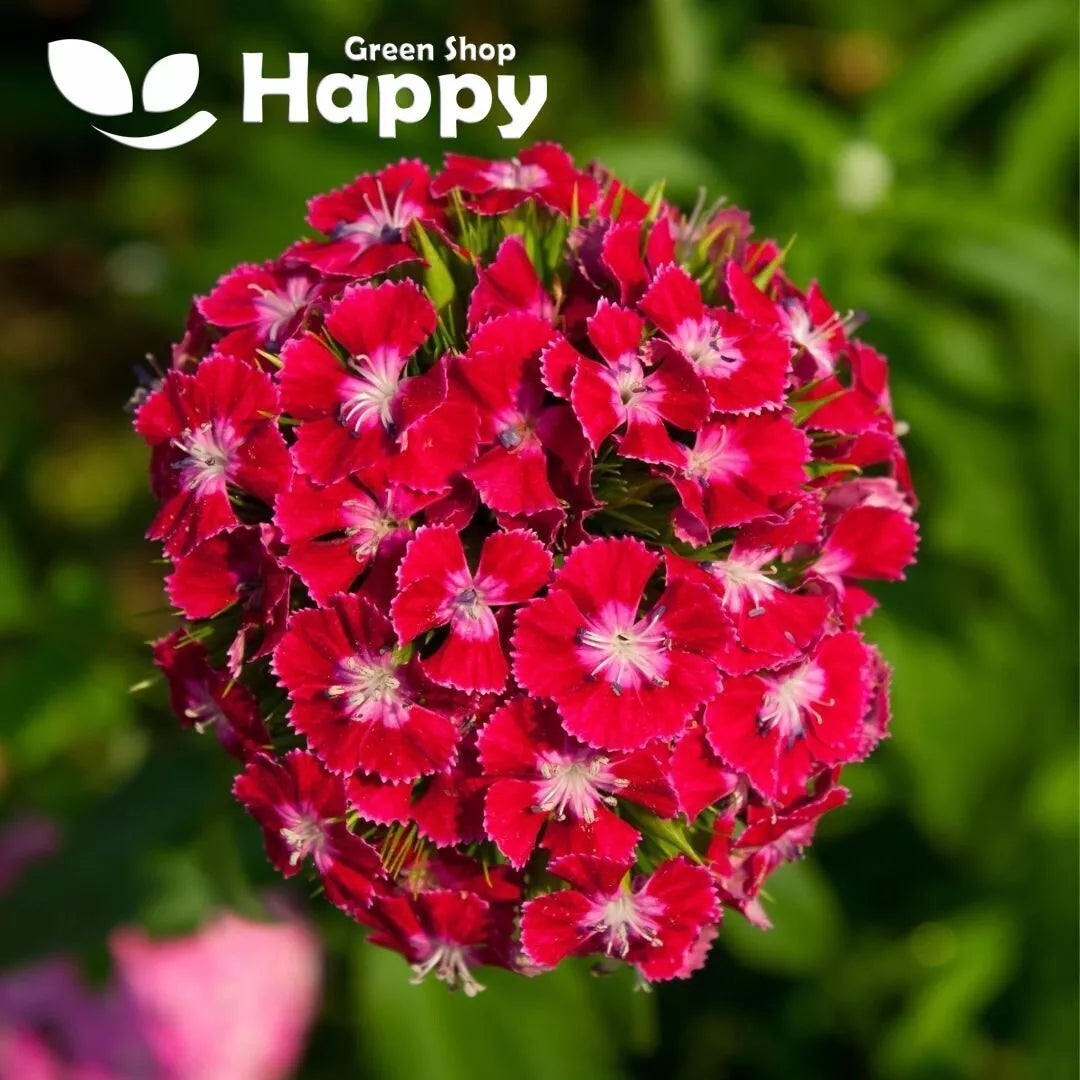
Sweet William Scarlet Seeds (Dianthus barbatus Red)
Sweet William Scarlet is a vibrant biennial flower renowned for its rich, scarlet-red flower clusters. With upright growth and densely packed blooms, it is perfect for borders, cottage gardens, and cut flower arrangements. This hardy biennial adds striking color and charm to any garden space.
What Makes It Special
-
Produces vivid scarlet-red flower clusters
-
Compact, upright growth ideal for borders and mixed beds
-
Excellent for cut flowers with long-lasting blooms
-
Biennial: reliable flowering in the second year
Key Features
-
Botanical name: Dianthus barbatus
-
Common name: Sweet William Scarlet
-
Seed count: Approx. seeds per pack
-
Height/Spread: 30–50 cm tall, 20–30 cm spread
-
Position: Full sun to partial shade, well-drained soil
-
Flowering period: Second year; late spring to early summer
-
Lifespan: Biennial
Ideal For
-
Borders, cottage-style gardens, and mixed flower beds
-
Cut flower arrangements
-
Pollinator-friendly gardens
-
Containers and patio planting
Sowing Instructions
-
When to sow:
-
Indoors: February–April for transplanting
-
Outdoors: April–May in well-prepared soil
-
-
How to sow:
-
Sow seeds thinly on the surface and press lightly into soil
-
Keep soil moist until germination (10–20 days)
-
-
Transplant/Thin: Space seedlings 20–30 cm apart
-
Care: Protect young plants from frost; deadhead spent flowers to prolong bloom
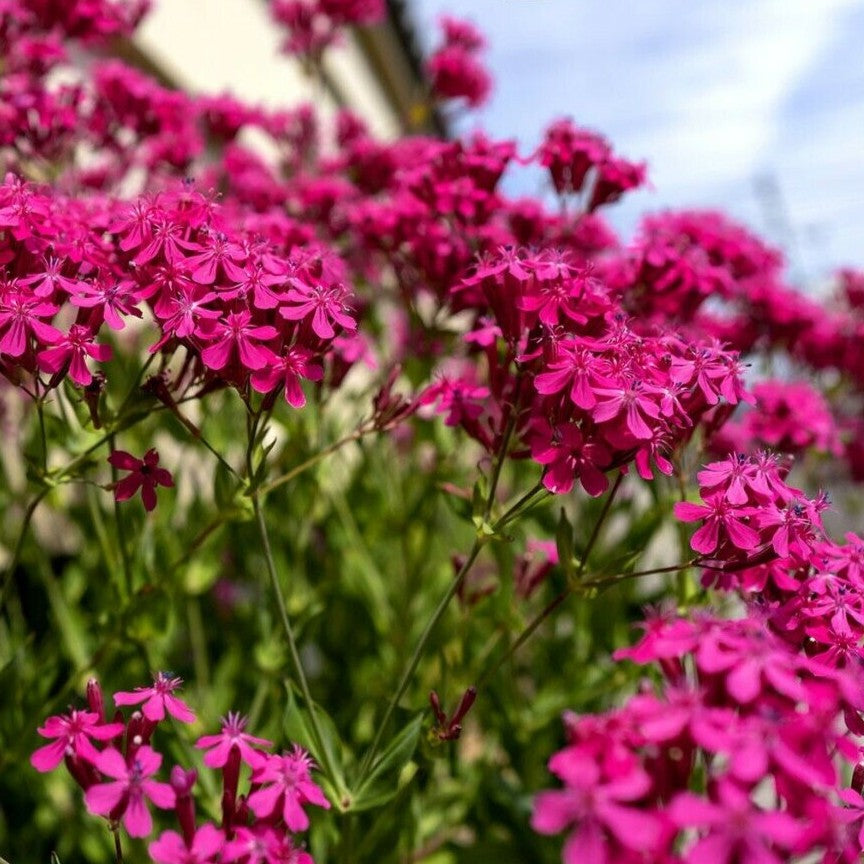
Catchfly 'Rubra Electra' – 4000 Seeds (Silene armeria)
Bring dazzling bursts of deep pink to your garden with Catchfly 'Rubra Electra'. This charming annual produces airy, delicate flowers perfect for borders, meadows, and cottage gardens.
What Makes It Special
-
Stunning deep pink blooms with a long flowering period
-
Adds height and texture to flower beds
-
Attracts pollinators like bees and butterflies
-
Easy to grow and low maintenance
Key Features
-
Height: 40–50 cm
-
Full sun loving, drought-tolerant
-
Blooms: late spring to summer
-
Annual, self-seeding
Ideal For
-
Borders, rock gardens, and wildflower meadows
-
Pollinator-friendly gardens
-
Cottage-style and naturalistic plantings
-
Cut flower arrangements
Sowing
-
Sow outdoors after the last frost
-
Cover lightly with soil and keep moist
-
Germination: 10–14 days
-
Thin seedlings to 15–20 cm apart

Nodding Catchfly 'Triumph' – 400 Seeds (Silene pendula)
Delight your garden with Nodding Catchfly 'Triumph', featuring charming, nodding flowers that add movement and color to borders, rock gardens, and wildflower mixes.
What Makes It Special
-
Elegant nodding flowers in soft shades
-
Long-lasting blooms
-
Attracts pollinators like bees and butterflies
-
Easy to grow from seed
Key Features
-
Height: 40–50 cm
-
Full sun, well-drained soil
-
Annual, self-seeding
Ideal For
-
Flower borders and rock gardens
-
Cottage gardens and meadows
-
Pollinator-friendly planting
-
Cut flowers
Sowing
-
Sow outdoors after the last frost
-
Lightly cover seeds with soil and keep moist
-
Germination: 10–14 days
-
Thin seedlings to 15–20 cm apart

Carnation 250 Seeds Grenadin Double Mix | Dianthus caryophyllus Fragrant Double Flowers
£1.35
Unit price perCarnation 250 Seeds Grenadin Double Mix | Dianthus caryophyllus Fragrant Double Flowers
£1.35
Unit price perDianthus caryophyllus 'Grenadin Double Mix' is a traditional garden carnation producing beautifully fragrant, fully double flowers on strong upright stems. The colourful mixture includes rich shades of red, pink, rose, yellow and white, creating a classic cottage-garden display with the unmistakable spicy, clove-like fragrance associated with old-fashioned carnations.
Grenadin is particularly valued as a cut flower, combining sturdy stems, attractive double blooms and excellent fragrance. Plants form compact clumps of distinctive blue-green foliage and flower abundantly through summer. Grown primarily as a biennial, it is an excellent choice for sunny borders, cutting gardens and traditional flower beds.
● Beautiful fully double flowers in a colourful mixed selection
● Strong, sweet and spicy clove-like fragrance
● Excellent long-stemmed flowers for cutting and arrangements
● Classic old-fashioned carnation with attractive blue-green foliage
● Abundant summer flowering from established plants
● Cut flower gardens
● Scented gardens
● Cottage gardens
● Sunny borders and flower beds
● Bouquets and floral arrangements
● For the traditional biennial growing method, sow in early to midsummer and establish young plants before autumn; they will overwinter and provide their main flower display the following summer.
● Cover seeds only lightly with fine compost. Grenadin seed germinates readily at around 18–20°C when kept consistently moist but not saturated.
● Choose a sunny position with excellent drainage, particularly over winter, as carnations perform poorly in persistently wet ground.
● Pinch young plants once established to encourage branching and produce more flowering stems for cutting.
● Cut flowers regularly and remove faded blooms to keep plants tidy and encourage continued flowering through summer.
Physostegia virginiana, commonly known as Obedient Plant or False Dragonhead, is a striking hardy perennial producing tall, upright spikes of elegant pink to pale lilac, snapdragon-like flowers. Blooming through summer into early autumn, the flowers open progressively from the bottom of each spike, creating a long-lasting display above attractive narrow green foliage.
Its unusual common name comes from a fascinating characteristic of the flowers: individual blooms can be gently moved sideways and will temporarily remain in their new position. Growing approximately 90–120 cm tall, this vigorous perennial is excellent for the middle or back of borders, cottage gardens and naturalistic planting. The long flowering stems are also excellent for cutting, while the flowers are attractive to visiting pollinators.
● Tall spikes packed with elegant pink to pale lilac flowers
● Unusual movable flowers give the Obedient Plant its memorable name
● Long flowering period from summer into early autumn
● Excellent tall perennial for cutting and flower arrangements
● Vigorous hardy perennial that returns year after year
● Cottage gardens
● Perennial borders
● Cut flower gardens
● Naturalistic and prairie-style planting
● Pollinator-friendly gardens
● For more uniform germination, give seeds approximately 3–4 weeks of cold-moist stratification before spring sowing. Alternatively, sow in autumn and allow natural winter conditions to provide the cold period.
● Be patient with germination. Physostegia seed can emerge irregularly over several weeks rather than germinating all at once.
● Grow in full sun for the strongest, most upright flowering stems; plants grown in too much shade or overly rich soil may become more prone to flopping.
● Keep established plants consistently moist during dry periods, as Obedient Plant performs particularly well in soils that retain some moisture.
● Allow enough room for mature plants to spread. The species grows by underground rhizomes and can gradually form substantial colonies, so divide or restrict clumps if they begin spreading beyond their allocated space.
Physostegia virginiana, commonly known as Obedient Plant or False Dragonhead, is a striking hardy perennial producing tall, upright spikes of elegant pink to pale lilac, snapdragon-like flowers. Blooming through summer into early autumn, the flowers open progressively from the bottom of each spike, creating a long-lasting display above attractive narrow green foliage.
Its unusual common name comes from a fascinating characteristic of the flowers: individual blooms can be gently moved sideways and will temporarily remain in their new position. Growing approximately 90–120 cm tall, this vigorous perennial is excellent for the middle or back of borders, cottage gardens and naturalistic planting. The long flowering stems are also excellent for cutting, while the flowers are attractive to visiting pollinators.
● Tall spikes packed with elegant pink to pale lilac flowers
● Unusual movable flowers give the Obedient Plant its memorable name
● Long flowering period from summer into early autumn
● Excellent tall perennial for cutting and flower arrangements
● Vigorous hardy perennial that returns year after year
● Cottage gardens
● Perennial borders
● Cut flower gardens
● Naturalistic and prairie-style planting
● Pollinator-friendly gardens
● For more uniform germination, give seeds approximately 3–4 weeks of cold-moist stratification before spring sowing. Alternatively, sow in autumn and allow natural winter conditions to provide the cold period.
● Be patient with germination. Physostegia seed can emerge irregularly over several weeks rather than germinating all at once.
● Grow in full sun for the strongest, most upright flowering stems; plants grown in too much shade or overly rich soil may become more prone to flopping.
● Keep established plants consistently moist during dry periods, as Obedient Plant performs particularly well in soils that retain some moisture.
● Allow enough room for mature plants to spread. The species grows by underground rhizomes and can gradually form substantial colonies, so divide or restrict clumps if they begin spreading beyond their allocated space.
Showing 51/51


