
Sort by:
300 products
300 products
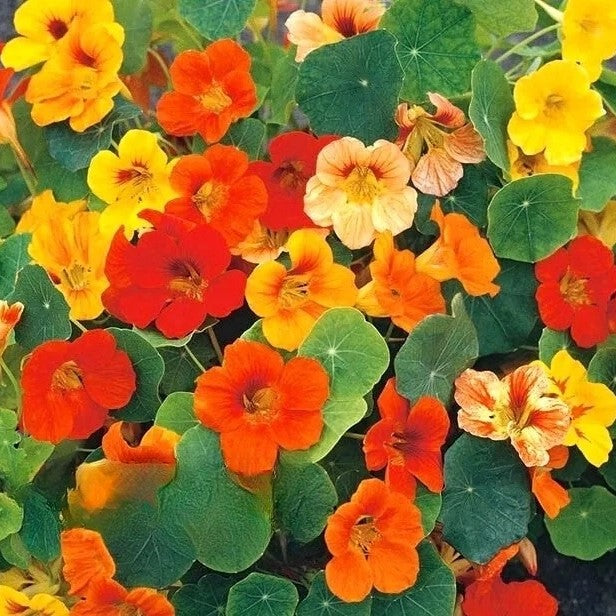
Nasturtium 'Honolulu' Seeds (Tropaeolum nanum)
Nasturtium 'Honolulu' is a charming dwarf annual with bright, cheerful flowers in shades of red, orange, and yellow. Its compact growth habit makes it ideal for containers, window boxes, and small garden beds. Easy to grow and low-maintenance, it adds a splash of vibrant color while attracting pollinators.
What Makes It Special
-
Bright, cheerful blooms in red, orange, and yellow
-
Compact, dwarf growth ideal for small spaces and containers
-
Easy to grow and low-maintenance
-
Attracts pollinators like bees and butterflies
Key Features
-
Botanical name: Tropaeolum nanum
-
Variety: 'Honolulu'
-
Seed count: Approx. seeds per pack
-
Height/Spread: 15–25 cm tall, 20–30 cm spread
-
Position: Full sun; well-drained soil
-
Flowering period: June–September
Ideal For
-
Containers, window boxes, and small garden beds
-
Borders and edging
-
Pollinator-friendly gardens
-
Brightening patios and terraces
Sowing Instructions
-
When to sow: March–May indoors or outdoors
-
How to sow:
-
Sow seeds 1–2 cm deep in seed trays or directly in pots
-
Germination occurs in 7–14 days at 18–22°C
-
-
Transplanting: Plant seedlings outdoors after frost, spacing 15–20 cm apart
-
Care: Water moderately; remove faded flowers to encourage continuous blooming

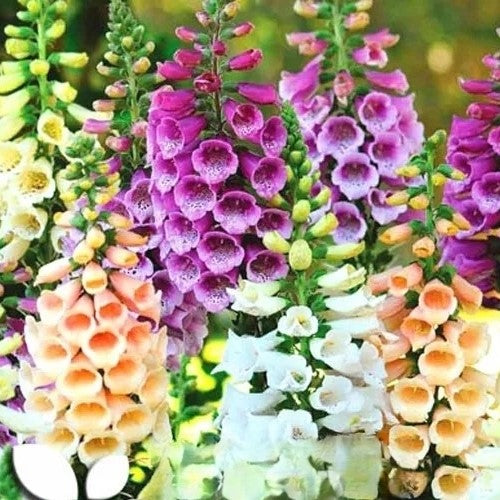
Dwarf Foxglove 'Foxy' Mix – 8000 Seeds (Digitalis purpurea)
Add cottage garden charm with Dwarf Foxglove 'Foxy', a compact variety that produces spires of trumpet-shaped blooms in shades of pink, purple, cream, and white. Unlike taller foxgloves, 'Foxy' grows to a manageable height, making it perfect for smaller gardens, beds, borders, and containers. Loved by bees and pollinators, it’s a classic for wildlife-friendly planting.
What Makes It Special
-
Compact foxglove, only 60–80 cm tall
-
Mix of soft, romantic colors with speckled throats
-
Blooms in the first year from seed
-
Perfect for beds, borders, and wildlife gardens
Key Features
-
Pack Size: 8000 seeds
-
Height: 60–80 cm
-
Biennial (flowers in year one if sown early)
-
Attracts bees and other pollinators
Ideal For
-
Cottage and wildlife gardens
-
Beds, borders, and mixed plantings
-
Containers and small gardens
-
Pollinator-friendly spaces
Sowing
-
Sow indoors Jan–May on moist seed compost, press seeds lightly (do not cover, needs light to germinate)
-
Germination: 14–21 days at 18–22°C
-
Transplant outdoors after frost, spacing 25–30 cm
-
Flowers: June–August

Cut Sunflower ‘F1 Splendor Orange’ – Seeds (Helianthus annuus)
Cut Sunflower ‘F1 Splendor Orange’ (Helianthus annuus) is a stunning annual producing large, vibrant orange blooms on tall, sturdy stems, perfect for cutting and floral arrangements. Blooming from mid-summer to early autumn, its long-lasting flowers attract pollinators and add a cheerful splash of color to borders, beds, and garden displays. This high-yielding, easy-to-grow variety is ideal for gardeners who love fresh-cut flowers.
Why Grow "F1 Splendor Orange"
-
Large, vibrant orange flowers ideal for cutting
-
Tall, sturdy stems with long-lasting blooms
-
Attracts pollinators including bees and butterflies
-
Perfect for borders, beds, and floral arrangements
Key Features
-
Type: Annual (Helianthus annuus)
-
Height: 150–180 cm
-
Flowering: Mid-summer to early autumn
-
Position: Full sun
-
Uses: Borders, beds, cut flowers, pollinator-friendly gardens
Ideal For
-
Fresh-cut flower production
-
Adding vertical color to borders and beds
-
Pollinator-friendly garden planting
-
Gardeners seeking high-yield, long-flowering sunflowers
Sowing & Growing
-
Sow indoors: 3–4 weeks before last frost
-
Sow outdoors: After frost danger has passed
-
Germination: 7–14 days
-
Space seedlings: 30–40 cm apart
-
Prefers well-drained soil and full sun
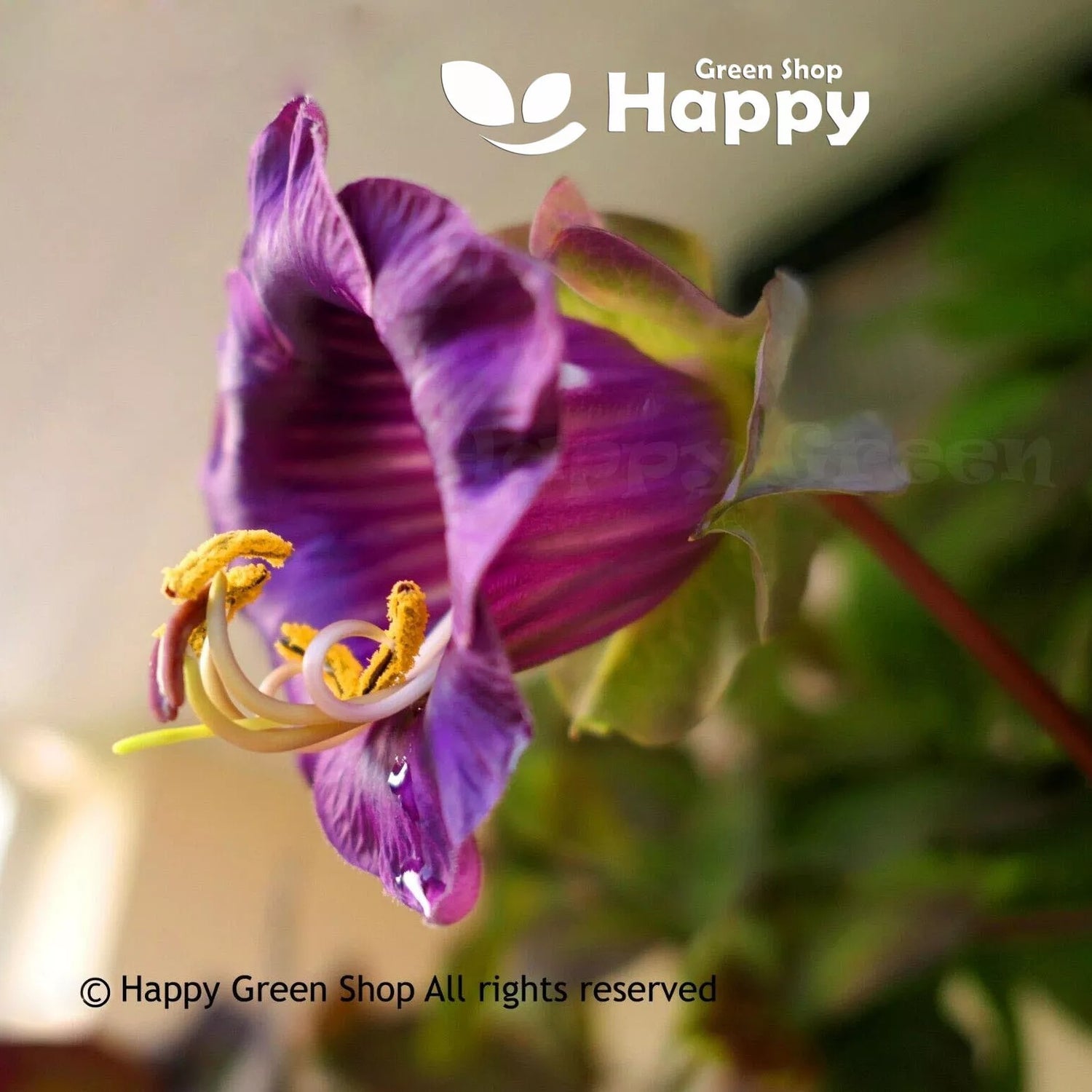
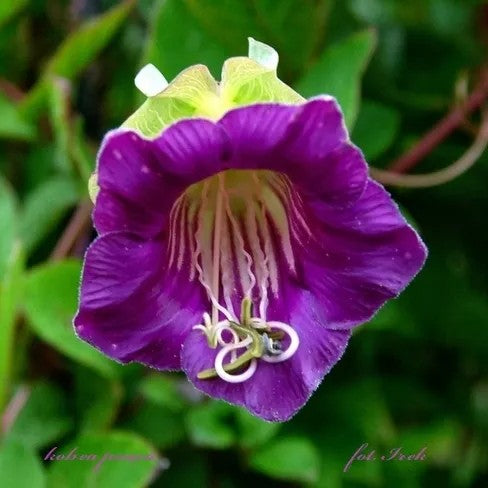
Cup and Saucer Purple – 14 Seeds (Cobaea scandens)
The Cup and Saucer Vine (Purple) is a vigorous climber producing dramatic, bell-shaped flowers that open green and mature into rich purple. Its fast-growing vines bring vertical beauty to arches, trellises, and fences, making it a standout centerpiece in any summer garden.
What Makes It Special
-
Exotic cup-and-saucer style blooms
-
Flowers shift from green to deep purple as they mature
-
Rapid-growing vine for quick coverage
-
Long flowering season, summer to frost
Key Features
-
Half-hardy perennial, usually grown as an annual
-
Height: 3–6 m
-
Stunning purple, bell-shaped blooms
-
Prefers full sun to partial shade
-
Attracts bees and pollinators
Ideal For
-
Arches, pergolas, trellises, and fences
-
Cottage and ornamental gardens
-
Vertical displays and natural privacy screens
-
Unique cut flowers
Sowing
-
Sow indoors 8–10 weeks before the last frost
-
Pre-soak seeds 12–24 hours before sowing
-
Plant seeds on their side, just under the surface
-
Germination: 20–30 days at 18–20°C
-
Transplant outdoors after frost, spacing 30–45 cm apart
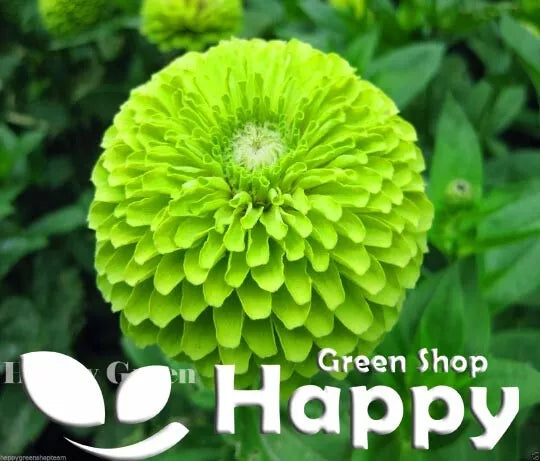
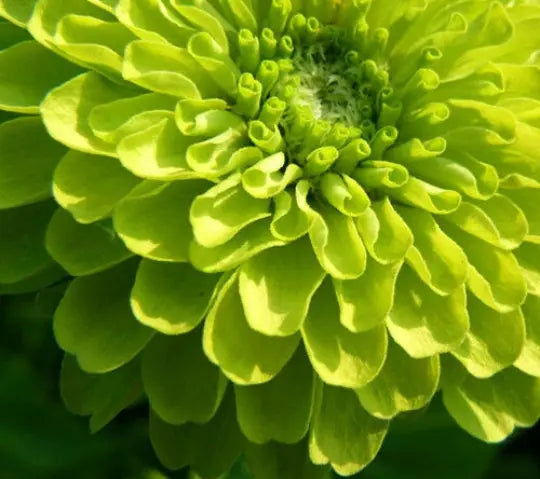
Zinnia Dahlia ‘Envy’ Lime – Striking Green Blooms for Unique Displays
Zinnia Dahlia ‘Envy’ Lime is a truly unique variety producing large, dahlia-type blooms in an unusual chartreuse-lime green. These striking flowers stand out in borders, bouquets, and mixed plantings, adding a fresh and sophisticated touch. Long-lasting and heat-tolerant, they bloom continuously from summer to frost.
What Makes It Special
-
Rare lime-green blooms not often seen in gardens
-
Large, fully double dahlia-type flowers
-
Long vase life – perfect for cutting
-
Heat- and drought-tolerant for easy care
-
Blooms all summer until frost
Key Features
-
Height: 75–90 cm – ideal for middle or back borders
-
Unique color that complements bright or pastel flowers
-
Excellent for fresh and dried arrangements
-
Attracts bees, butterflies, and pollinators
-
Sturdy stems hold up well in bouquets
Ideal For
-
Cutting gardens and floral arrangements
-
Mixed borders and cottage gardens
-
Adding contrast to colorful plantings
-
Late-summer wedding bouquets
Sowing
-
Sow indoors 4–6 weeks before last frost or direct sow after frost danger has passed
-
Cover seeds lightly with fine soil
-
Germination: 5–10 days at 21–24°C
-
Space plants 30–40 cm apart
-
Prefers full sun and well-drained soil
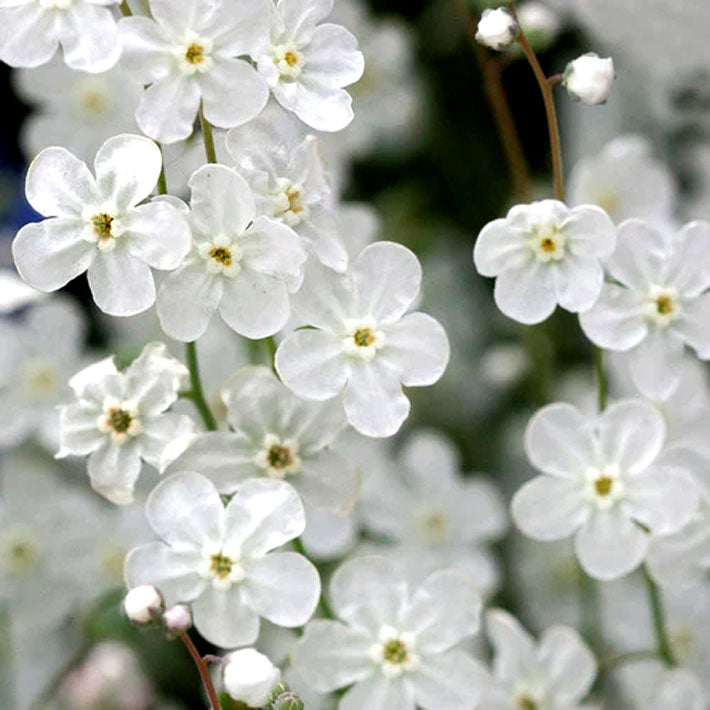
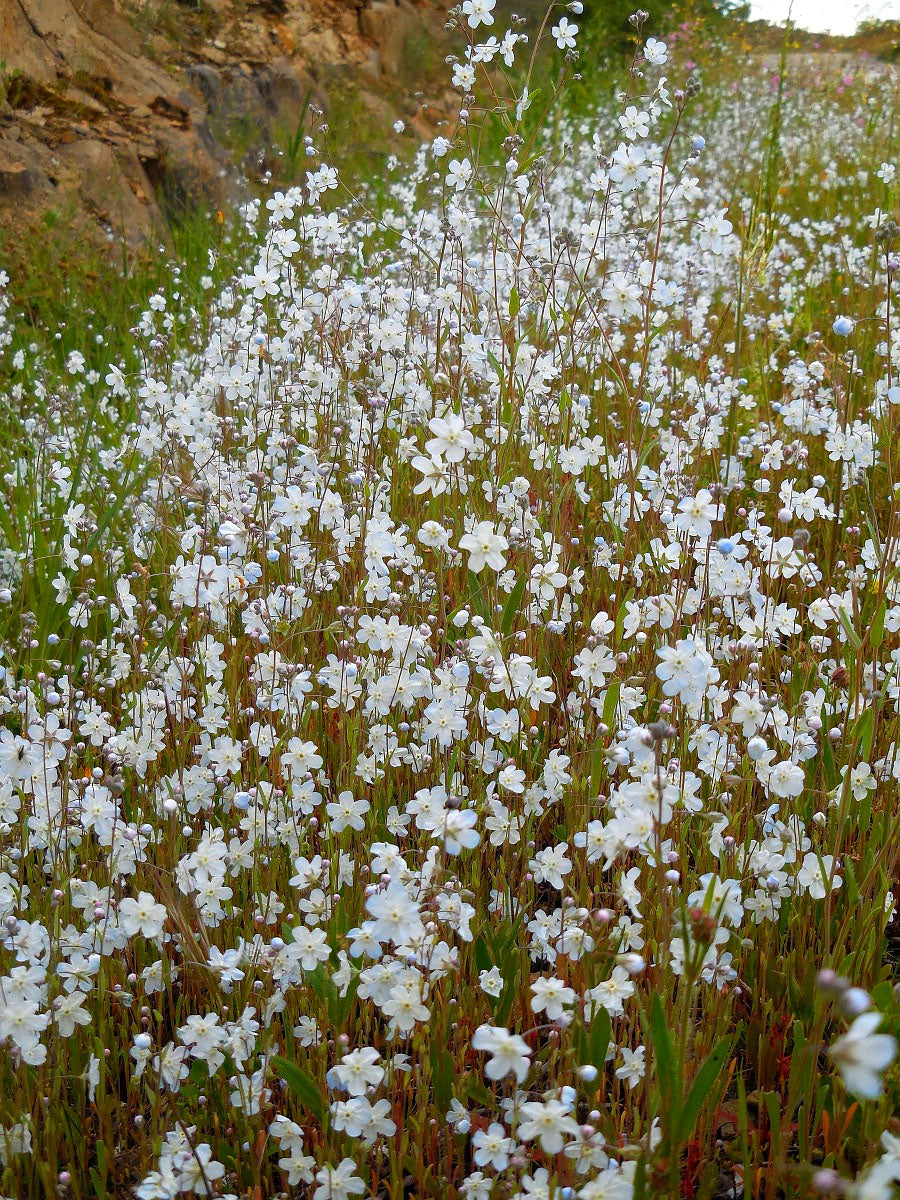
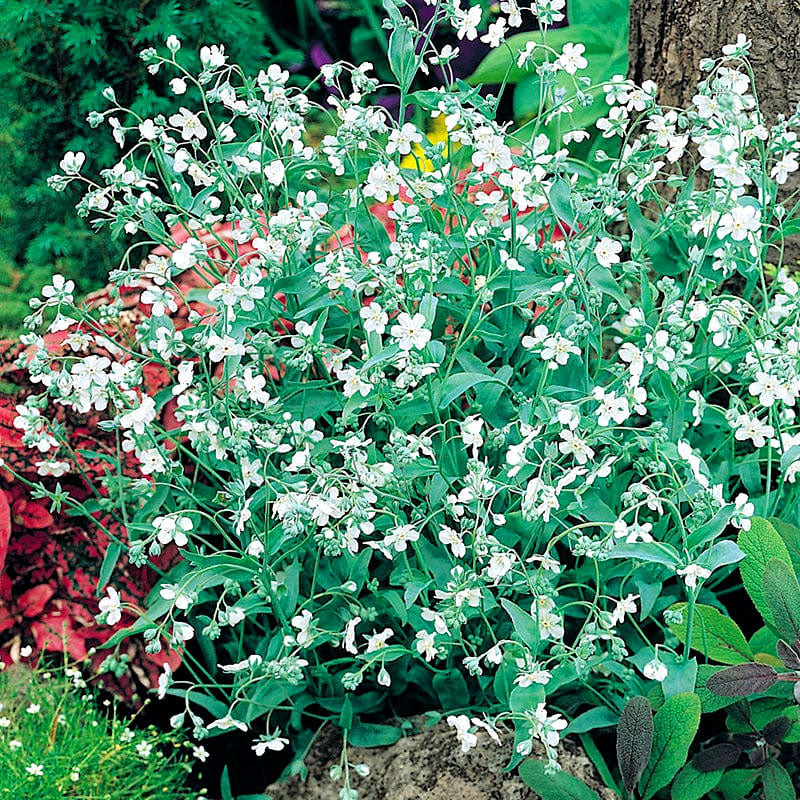
Venus’s Navelwort Seeds (Omphalodes linifolia)
Add charming groundcover to shaded areas with Venus’s Navelwort (Omphalodes linifolia). This perennial produces delicate, star-shaped blue flowers above lush green foliage, forming a carpet of color in spring and early summer. Hardy and easy to grow, it’s perfect for woodland gardens, borders, and shady rock gardens, attracting pollinators and adding a soft, natural touch.
How to Grow
-
Sow seeds indoors in late winter or outdoors in early spring.
-
Use well-drained, humus-rich soil in partial to full shade.
-
Scatter seeds thinly on the soil surface and press lightly; do not cover.
-
Keep soil consistently moist until germination (14–28 days).
-
Thin seedlings to 20–25 cm apart once established.
-
Mulch around plants to retain moisture and encourage healthy growth.
Key Features
-
Delicate star-shaped blue flowers over lush green foliage
-
Hardy perennial, forming a dense groundcover
-
Ideal for shaded borders, woodland gardens, and rock gardens
-
Attracts pollinators including bees and butterflies
-
Low-maintenance and long-lasting
Ideal For
-
Shaded garden beds and borders
-
Woodland and cottage-style gardens
-
Rock gardens and naturalized plantings
-
Pollinator-friendly landscapes
Sowing
-
Best time: Late winter indoors or early spring outdoors
-
Germination: 14–28 days
-
Sow thinly, press lightly, do not cover
-
Prefers partial to full shade and well-drained, humus-rich soil
Quick Tip
-
Provide consistent moisture and partial shade for best flowering and lush foliage.

Cornflower ‘Red Ball’ Seeds (Centaurea cyanus) – 500 Seeds
Bring bold color to your garden with Cornflower ‘Red Ball’ (Centaurea cyanus). This annual produces striking, deep red, pom-pom-like blooms that add a dramatic touch to borders, meadows, and cutting gardens. Easy to grow and long-flowering, it’s perfect for gardeners seeking vibrant color and pollinator-friendly planting.
How to Grow
-
Sow directly outdoors in spring or autumn.
-
Use well-drained soil in full sun.
-
Scatter seeds thinly and cover lightly with soil.
-
Keep soil moist until germination (7–14 days).
-
Thin seedlings to 20–25 cm apart once established.
-
Deadhead regularly to encourage continuous blooming.
Key Features
-
Striking deep red, pom-pom-like blooms
-
Hardy annual, easy to grow and long-flowering
-
Ideal for borders, meadows, and cutting gardens
-
Attracts bees, butterflies, and other pollinators
-
Bold, eye-catching color for garden displays
Ideal For
-
Flower borders and cottage gardens
-
Meadow-style plantings and naturalized areas
-
Cutting gardens for fresh bouquets
-
Pollinator-friendly landscapes
Sowing
-
Best time: Spring or autumn directly outdoors
-
Germination: 7–14 days
-
Sow thinly, cover lightly, and keep soil moist
-
Prefers full sun and well-drained soil
Quick Tip
-
Sow in drifts or clusters to maximize visual impact and create a bold color display.
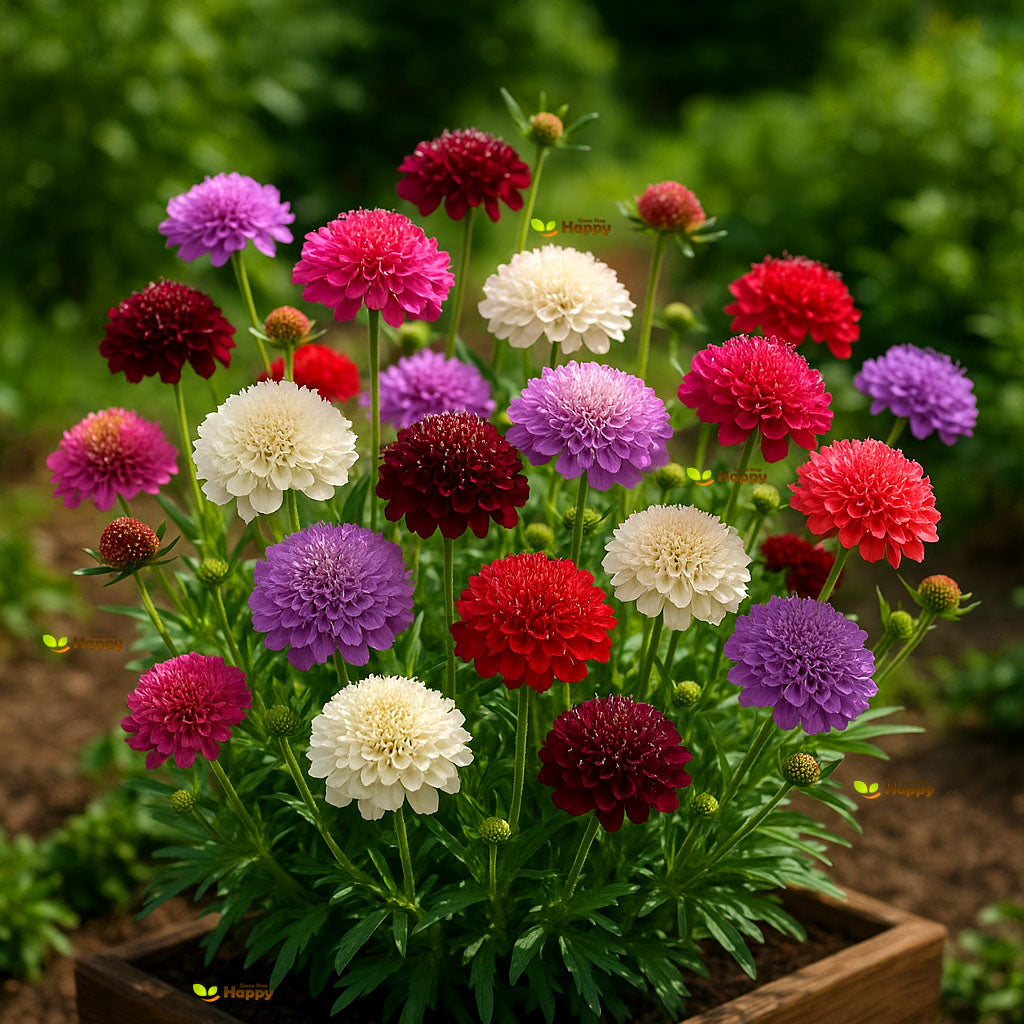
Sweet Scabious Dwarf Double Mix – Seeds
(Scabiosa atropurpurea)
Sweet Scabious Dwarf Double Mix produces compact, bushy plants adorned with fully double, colourful blooms in shades of pink, lavender, and cream. Long-flowering and easy to grow, these dwarf scabious plants are perfect for borders, rockeries, and container displays. They attract butterflies and bees, making them a pollinator-friendly garden choice.
Why Grow Sweet Scabious Dwarf Double Mix?
-
Fully double, colourful flowers in pink, lavender, and cream
-
Compact and long-flowering
-
Attracts pollinators like bees and butterflies
-
Ideal for borders, rockeries, and containers
Key Features
-
Type: Annual / short-lived perennial
-
Height: 25–35 cm
-
Flowers: Summer to early autumn
-
Position: Full sun
-
Soil: Well-drained, moderately fertile
Ideal For
-
Cottage and mixed borders
-
Rockeries and containers
-
Pollinator-friendly gardens
-
Low-maintenance ornamental planting
Sowing & Growing
-
Sow indoors: February–April in seed trays
-
Sow outdoors: April–May directly in prepared soil
-
Germination: 10–20 days at 18–20°C
-
Thin seedlings to 20–25 cm apart
-
Care: Water moderately; deadhead to prolong flowering

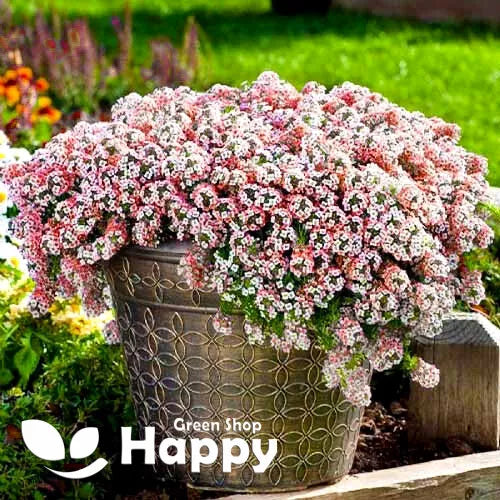
Sweet Alyssum ‘Paletta’ Salmon – Seeds
(Lobularia maritima)
Sweet Alyssum ‘Paletta’ Salmon is a low-growing annual with dense clusters of fragrant, salmon-colored flowers. Its spreading habit makes it perfect for borders, rockeries, and containers. Long-flowering, easy to grow, and attractive to pollinators, it adds a soft, delicate touch to any garden.
Why Grow Sweet Alyssum ‘Paletta’ Salmon?
-
Dense clusters of fragrant salmon-colored blooms
-
Low-growing, spreading habit
-
Long-flowering and easy to grow
-
Attracts bees and butterflies
Key Features
-
Type: Annual
-
Height: 10–20 cm
-
Flowers: Spring to autumn
-
Position: Full sun to partial shade
-
Soil: Well-drained, moderately fertile
Ideal For
-
Borders, rockeries, and containers
-
Pollinator-friendly gardens
-
Edging and groundcover plantings
-
Low-maintenance, long-flowering displays
Sowing & Growing
-
Sow indoors: February–April in seed trays
-
Sow outdoors: March–May in prepared soil
-
Germination: 7–14 days at 15–20°C
-
Spacing: 15–20 cm apart
-
Care: Regular watering; deadhead for prolonged flowering
Showing 63/300


