
Sort by:
26 products
26 products
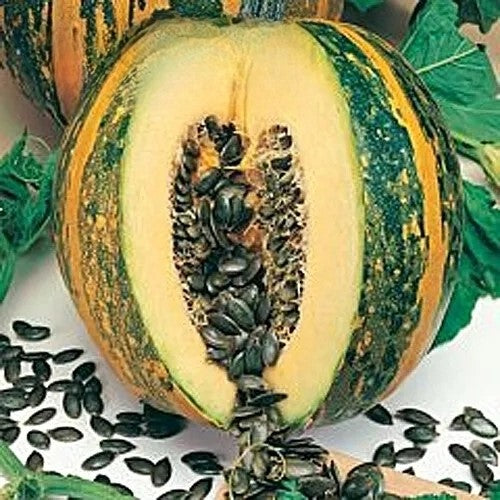
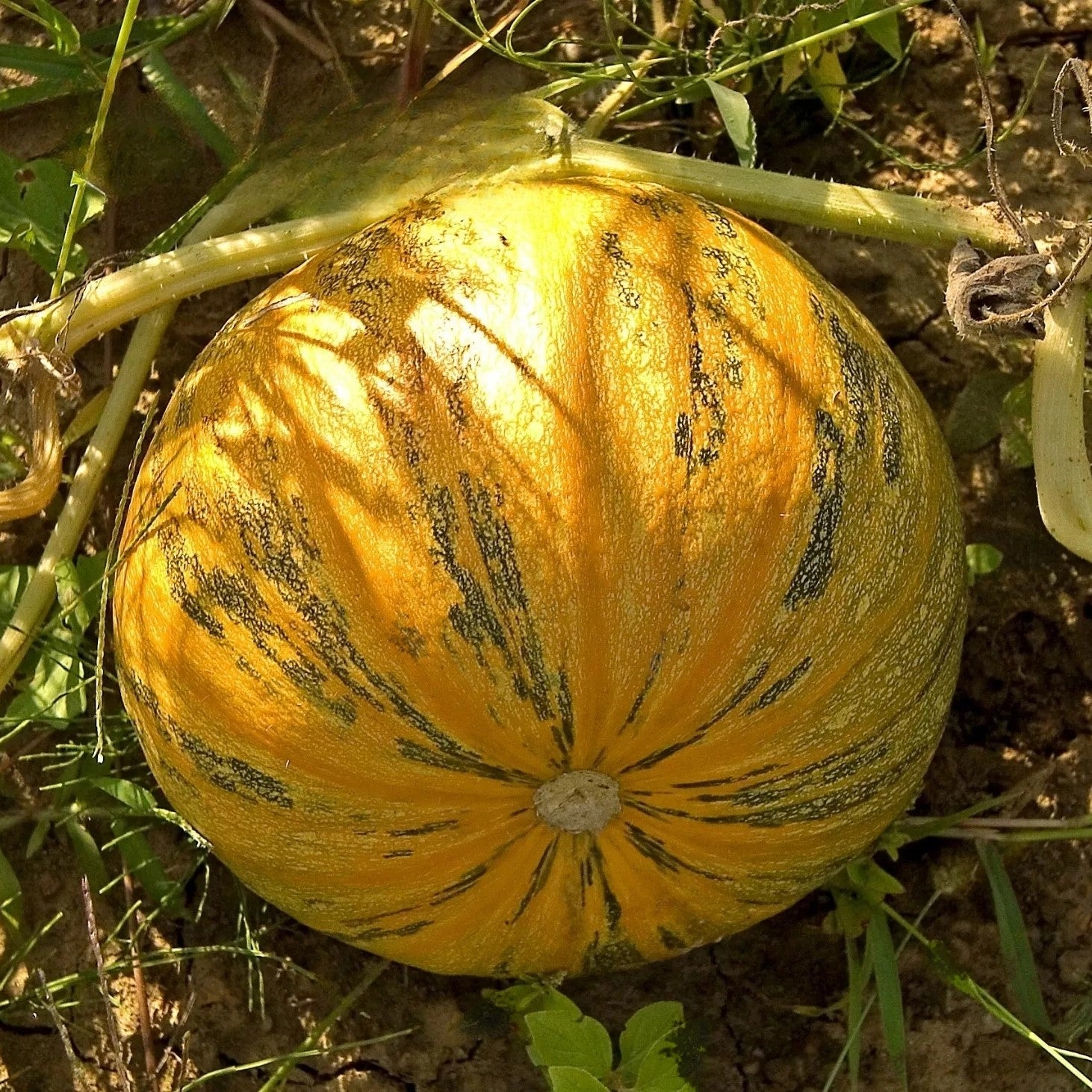
Oil Squash 'Olga' Pumpkin – Seeds (Cucurbita pepo)
The Oil Squash 'Olga' is a versatile pumpkin variety prized for its dense, flavorful flesh and high oil content. Ideal for culinary use, soups, baking, or roasting, 'Olga' produces medium to large, round fruits with smooth skin and rich, orange flesh.
This vigorous plant grows well in garden beds or allotments, providing reliable yields throughout the season. Its robust growth habit and excellent storage qualities make it a practical choice for home gardeners seeking both taste and productivity.
How to Grow
-
Sow outdoors: April – May after last frost
-
Plant spacing: 100–120 cm between plants
-
Position: Full sun
-
Soil: Fertile, well-drained soil enriched with compost
-
Care: Water regularly and mulch to retain moisture; remove weeds to support healthy growth
Key Features
-
Medium to large, round pumpkins with smooth skin
-
Dense, flavorful flesh ideal for oil extraction, cooking, or baking
-
High-yielding and vigorous plants
-
Good storage qualities for long-term use
-
Suitable for garden beds or allotments
Harvest
-
Harvesting period: 90–120 days after sowing
-
Pick when the skin is fully colored and hard; store in a dry, cool place.
Short Tip
Allow fruits to fully ripen on the vine for maximum flavor and oil content.
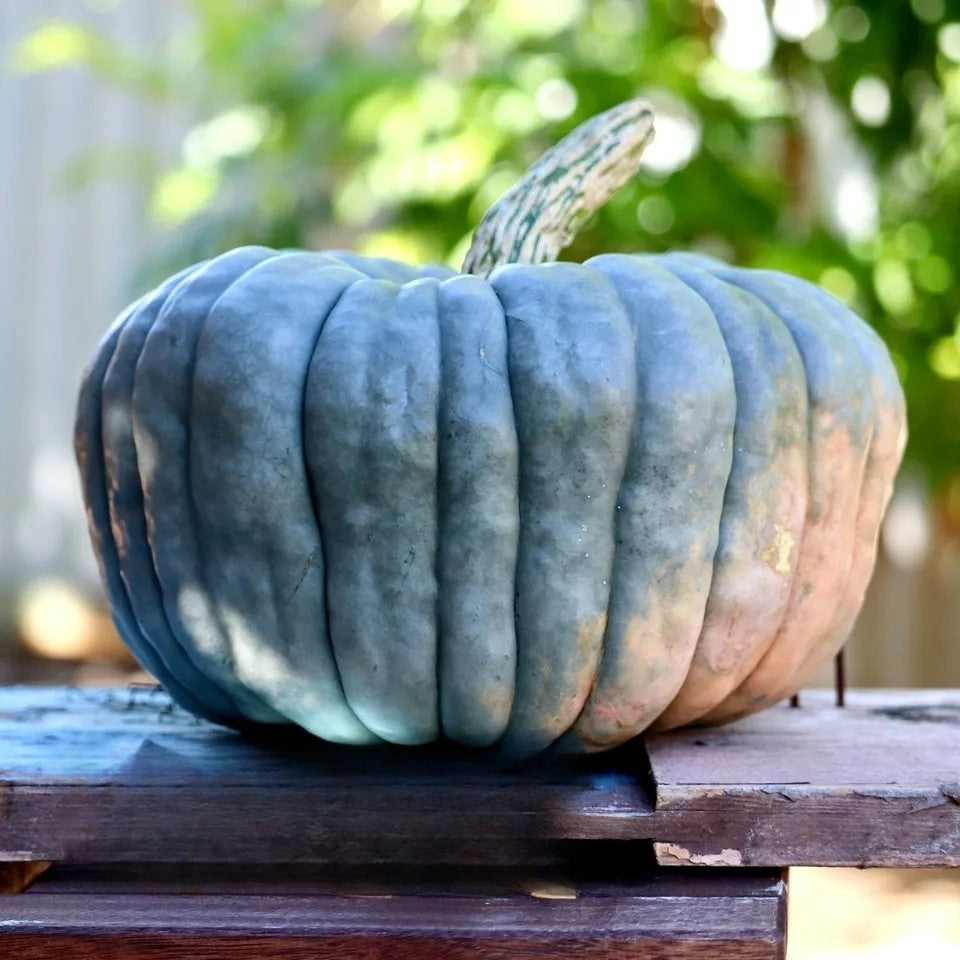
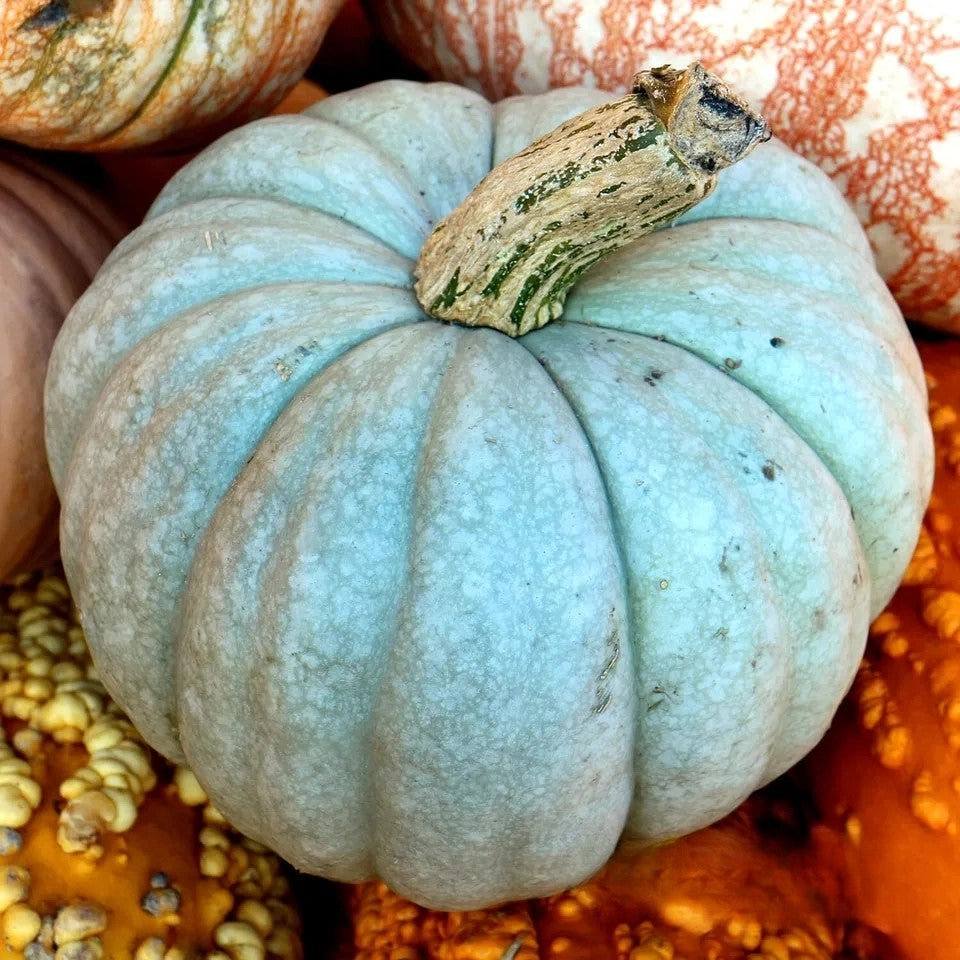
Cucurbita maxima 'Queensland Blue' is a traditional Australian winter squash producing impressive, deeply ribbed fruits with distinctive slate-blue to blue-grey skin and rich orange flesh. The dense flesh has an excellent sweet, rich flavour and is particularly well suited to roasting, baking, soups and other autumn and winter dishes.
A vigorous trailing variety, Queensland Blue produces substantial fruits with excellent keeping qualities when allowed to mature fully and properly cured after harvest. Plants thrive in rich soil and a warm, sunny position, making this an excellent choice for allotments and productive kitchen gardens where there is plenty of space for the vigorous vines.
● Distinctive deeply ribbed, slate-blue to blue-grey fruits
● Dense, sweet orange flesh with excellent culinary quality
● Superb winter squash for roasting, baking and soups
● Excellent storage qualities after proper curing
● Traditional Australian heritage variety
● Kitchen gardens
● Allotments
● Autumn and winter cooking
● Growing vegetables for storage
● Large sunny vegetable beds
● Sow seeds individually in pots and place them on their side approximately 1.5–2 cm deep, reducing unnecessary root disturbance before planting out.
● Prepare the final planting position with plenty of well-rotted organic matter, as Queensland Blue is a vigorous, hungry crop that performs best in fertile soil.
● Water deeply and consistently during flowering and fruit development, directing water towards the soil rather than over the foliage.
● Raise developing fruits slightly off damp soil using a board, tile or similar dry surface to reduce prolonged contact with wet ground.
● Harvest mature fruits with a section of stalk attached and cure them before storage; fully matured Queensland Blue is particularly valued for its excellent keeping qualities.
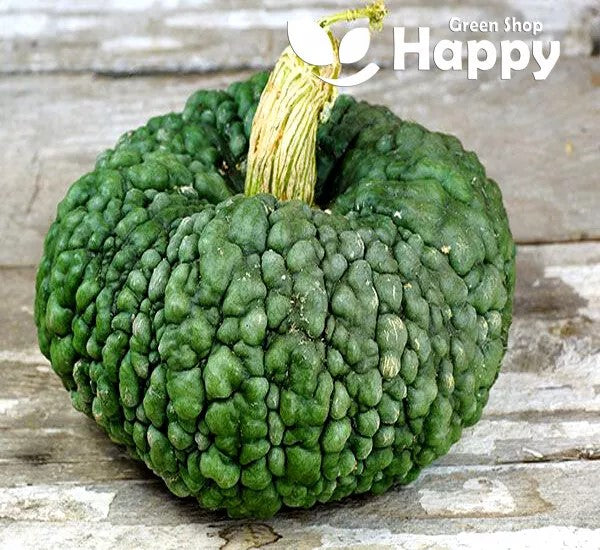
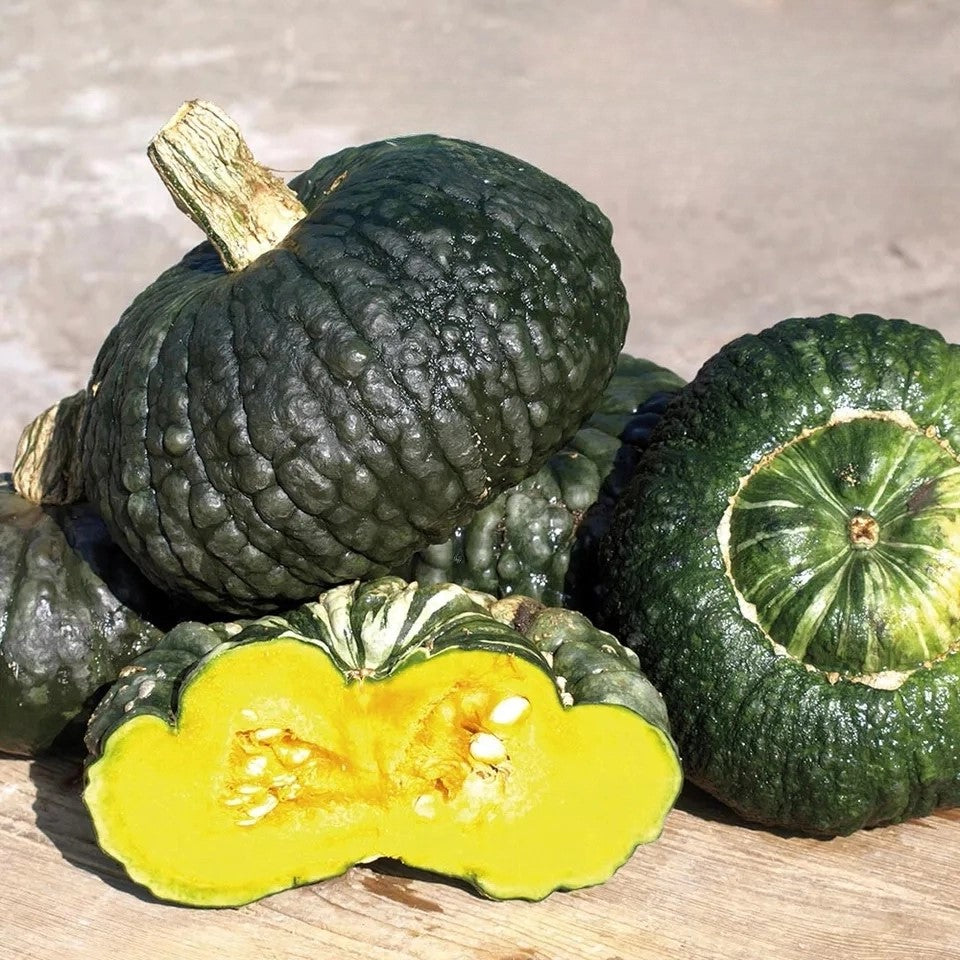
Squash 'Marina di Chioggia' – Seeds (Cucurbita maxima)
The 'Marina di Chioggia' squash is a traditional Italian heirloom variety, prized for its rugged, dark green, warty skin and rich, sweet orange flesh. Originating from the coastal town of Chioggia near Venice, this unique pumpkin has been a staple in Italian markets for centuries and is still beloved today for its superb flavor in soups, gnocchi, risottos, and baking.
Its fruits are typically 3–5 kg, round, and deeply ribbed, with a long storage life that makes them excellent for use throughout the winter months. A true standout in the garden and kitchen alike!
How to Grow
. Sow indoors: April – May in pots, 2–3 cm deep
. Transplant outdoors: Late May – June, after frost risk has passed
. Sow outdoors: May – June, directly in the ground
. Spacing: 1 m apart in rich, well-drained soil
. Harvest: September – October, when fruits are fully ripened
Key Features
. Italian heirloom pumpkin with striking warty skin
. Fruits weigh 3–5 kg, perfect for storage
. Sweet, dense, orange flesh – ideal for roasting, soups & baking
. Long-keeping winter squash
. Traditional variety still popular in Venice markets
Ideal For
. Traditional and heritage vegetable gardens
. Chefs and home cooks seeking authentic Italian flavors
. Long-term winter storage
. Eye-catching display in kitchen gardens and autumn harvests
Sowing & Harvesting
. Sow: April – June
. Harvest: September – October
Quick Tip
For best results, feed regularly with compost or organic fertilizer and allow fruits to ripen fully on the vine for maximum sweetness.

Cucurbita pepo ‘Early Summer Crookneck’ – Classic Early Summer Squash with Tender Yellow Fruits
‘Early Summer Crookneck’ is a traditional summer squash variety valued for its bright yellow fruits with a distinctive curved neck and smooth to lightly textured skin. Harvested young, the squash has tender, mild-flavoured flesh, ideal for sautéing, grilling, roasting and stuffing. This variety is early to mature, highly productive, and dependable in warm conditions, making it a staple for home gardens and allotments.
Key Features
● Early-maturing summer squash variety
● Bright yellow fruits with characteristic curved neck
● Best harvested young for tender texture
● High-yielding and reliable producer
● Excellent for a wide range of culinary uses
How to Sow & Grow Squash ‘Early Summer Crookneck’ (UK)
Sow indoors: IV (April)
Transplant outdoors: V–VI (May–June) after last frost
Direct outdoors: V–VI (May–June) once soil is warm
Harvest: VI–IX (June–September)
Life cycle: Annual
Germination temperature: 18–24 °C (64–75 °F)
Average germ time: 7–10 days
Depth: 2–3 cm (1 in)
Light required: Yes
Moisture: Regular watering, especially during fruiting
Environment: Full sun
Soil type: Fertile, well-drained soil rich in organic matter
Plant spacing: 80–100 cm (2.5–3 ft)
Growth habit: Bush type
Sowing & Growing Tips (variety-specific)
● Harvest fruits at 10–15 cm (4–6 in) for best flavour.
● Pick regularly to encourage continuous production.
● Avoid letting fruits grow oversized, which reduces quality.
● Feed and water consistently during peak growth.
● Bush habit makes plants easy to manage in smaller spaces.
Special Features
● Classic heirloom summer squash
● Fast-growing with extended harvest period
● Ideal for fresh summer cooking


🎃 Cucurbita maxima Winter Squash ‘Burgess Buttercup’ – Sweet, Dense, Nutty Flesh with Excellent Winter Storage
‘Burgess Buttercup’ is a classic heirloom winter squash producing dark green, turban-shaped fruits with a distinctive grey “button” on top. The rich orange flesh is exceptionally sweet, dense, smooth and nutty, making it one of the best varieties for roasting, soups, mashing, and baking. Each fruit typically weighs 1.5–2.5 kg (3–5 lb) and stores extremely well through winter. Vigorous vines produce reliable yields and thrive in warm, sunny positions.
Key Features
● Exceptionally sweet, dense, nutty orange flesh
● Excellent winter storage variety
● Vigorous vines with high productivity
● Ideal for roasting, soups, baking, and purées
How to Sow & Grow Winter Squash ‘Burgess Buttercup’ (Cucurbita maxima) – UK
Sow indoors: IV–V (April–May) in pots
Transplant outdoors: V–VI (May–June) once frost danger has passed
Direct outdoors: V–VI (May–June) in warm, prepared soil
Harvest: IX–X (September–October)
Germination temperature: 20–25 °C (68–77 °F)
Average germ time: 7–14 days
Depth: 2–3 cm (¾–1¼ in)
Light required: Yes
Moisture: Keep soil evenly moist
Environment: Full sun
Soil type: Rich, fertile, moisture-retentive soil
Plant spacing: 1.5–2 m (5–6.5 ft)
Vine length: 2–3 m (6.5–10 ft)
Sowing & Growing Tips (variety-specific)
● Start indoors for earlier fruit set, especially in cooler regions.
● Mulch generously to retain moisture and support large fruits.
● Feed regularly once vines begin running.
● Harvest when rind hardens and the stem becomes corky.
● Cure fruits for 10–14 days in a warm, airy place to improve storage.
Special Features
● Outstanding winter keeper with rich gourmet flavour
● Dense, dry flesh perfect for roasting and baking

Carving Pumpkin ‘Connecticut Field’ Seeds (Cucurbita pepo)
Grow classic, large pumpkins with Carving Pumpkin ‘Connecticut Field’ (Cucurbita pepo). This traditional variety produces robust, round-to-flattened fruits perfect for Halloween carving, autumn decorations, and cooking. Easy to grow and highly productive, it’s ideal for home gardens, allotments, and family pumpkin projects.
How to Grow
-
Sow seeds indoors 3–4 weeks before the last frost or directly outdoors after frost risk has passed.
-
Use fertile, well-drained soil in full sun.
-
Sow seeds 2–3 cm deep and thin seedlings to 90–120 cm apart.
-
Provide ample space for sprawling vines and regular watering.
-
Harvest pumpkins when fully orange, firm, and the skin resists pressure.
Key Features
-
Large, round-to-flattened pumpkins
-
Ideal for carving, decoration, and cooking
-
Hardy, easy to grow, and highly productive
-
Classic autumn pumpkin variety
-
Suitable for home gardens, allotments, and family projects
Ideal For
-
Halloween carving and festive decoration
-
Autumn cooking, soups, and baking
-
Vegetable gardens and allotments
-
Family and community gardening projects
Sowing
-
Best time: 3–4 weeks before last frost indoors or after frost outdoors
-
Depth: 2–3 cm
-
Spacing: 90–120 cm apart
-
Prefers full sun and fertile, well-drained soil
Quick Tip
-
Mulch around the base of plants to retain moisture and prevent soil-borne diseases.

🎃 Cucurbita maxima ‘Pacific Giant’ – Exhibition Giant Pumpkin for Extreme Size
‘Pacific Giant’ is a classic giant pumpkin variety bred specifically for producing exceptionally large fruits, making it a popular choice for exhibitions, competitions and growers aiming for maximum size. With vigorous growth and long trailing vines, this variety is capable of producing massive pumpkins when given rich soil, ample space and consistent feeding.
The fruits are typically large, round to slightly flattened, with a smooth orange rind. While mainly grown for size rather than flavour, ‘Pacific Giant’ is an impressive centrepiece in the garden and a favourite among competitive growers.
Key Features
● Giant pumpkin variety bred for extreme size
● Ideal for shows, competitions and exhibitions
● Very vigorous growth with long trailing vines
● Large, round to flattened fruits
● Requires space, feeding and regular watering
How to Sow & Grow Pumpkin ‘Pacific Giant’ (UK)
Sow indoors: IV (April)
Transplant outdoors: V–VI (May–June) after last frost
Direct outdoors: V–VI (May–June) once soil is warm
Harvest: IX–X (September–October)
Life cycle: Annual
Germination temperature: 20–25 °C (68–77 °F)
Average germ time: 7–10 days
Depth: 2–3 cm (1 in)
Light required: Yes
Moisture: Heavy, regular watering
Environment: Full sun
Soil type: Very fertile, deep soil rich in organic matter
Plant spacing: 120–150 cm (4–5 ft)
Growth habit: Long trailing vines
Sowing & Growing Tips (variety-specific)
● Prepare soil with plenty of compost or well-rotted manure.
● Allow only 1–2 fruits per plant to maximise size.
● Feed regularly with a high-potassium fertiliser during fruit development.
● Turn fruits gently during growth to improve shape.
● Lift fruits onto straw or boards to prevent rot.
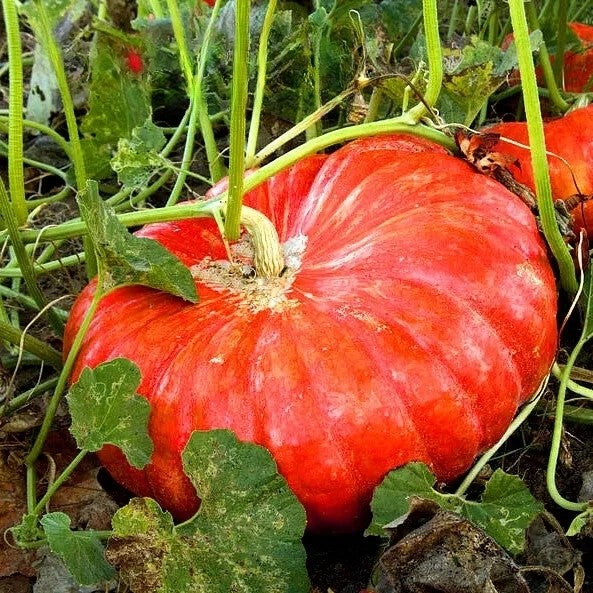
Pumpkin 'Rouge d'Etampes' – Seeds (Cucurbita pepo)
The Pumpkin 'Rouge d'Etampes', also known as the Cinderella Pumpkin, is a stunning French heirloom variety prized for its large, flattened, deeply ribbed fruits with a vivid red-orange skin. Traditionally grown in the Paris region, it is famous for both its striking ornamental appeal and its delicious, sweet, fine-grained flesh.
Perfect for roasting, soups, pies, and preserves, it’s also a favourite for autumn displays thanks to its dramatic shape and colour.
How to Grow
-
Sow indoors: April – May, in pots
-
Sow outdoors: Late May – June, after last frost
-
Planting distance: 100 cm apart
-
Soil: Rich, fertile, well-drained soil with added compost or manure
-
Position: Full sun
-
Care: Keep well-watered, mulch to retain soil moisture, and provide space for trailing vines
Key Features
-
Traditional French heirloom pumpkin
-
Beautiful flattened, ribbed, red-orange fruits
-
Excellent sweet flavour for roasting, soups, and pies
-
Dual purpose – culinary and ornamental
-
Large fruits with good yields
Sowing & Harvest
-
Sow: April – June
-
Harvest: September – October
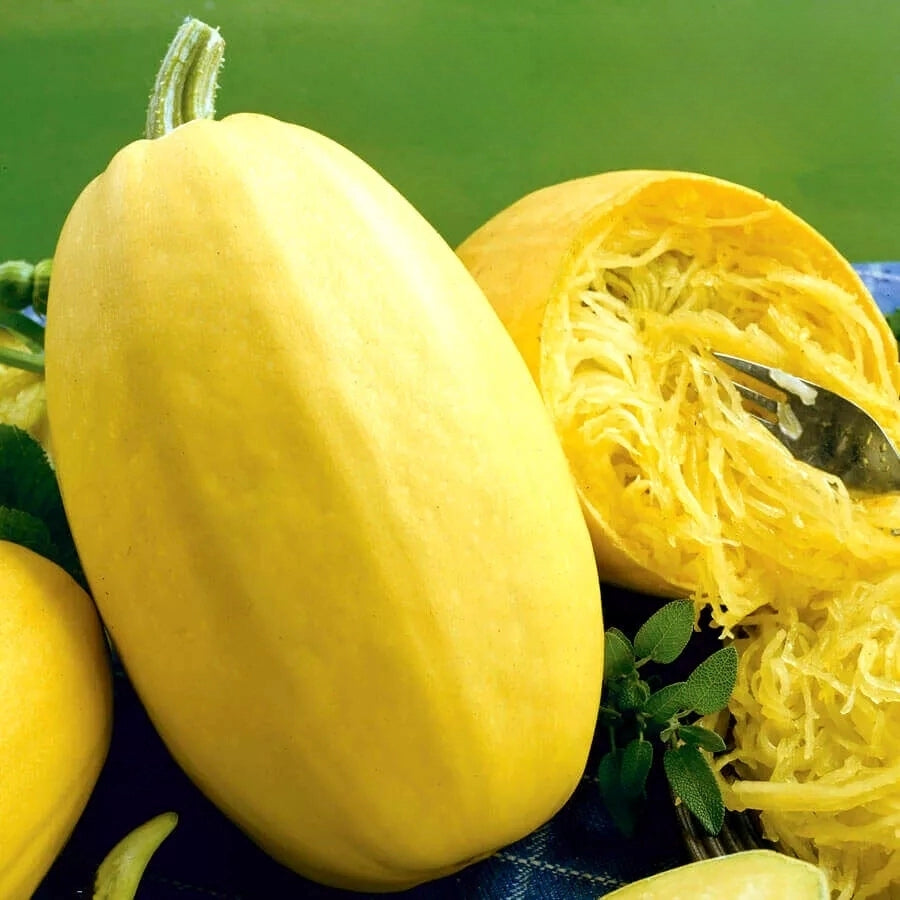
Squash ‘Spaghetti’ Seeds (Cucurbita pepo)
Grow unique, versatile vegetables with Squash ‘Spaghetti’ (Cucurbita pepo). This climbing variety produces medium-sized, oblong fruits with pale yellow skin and stringy flesh that separates into spaghetti-like strands when cooked. Perfect for healthy, low-carb meals, it’s easy to grow in home gardens, allotments, or large containers.
How to Grow
-
Sow seeds indoors 3–4 weeks before the last frost or directly outdoors after frost risk has passed.
-
Use fertile, well-drained soil in full sun.
-
Sow seeds 2–3 cm deep and thin seedlings to 90–120 cm apart.
-
Provide support or allow vines to spread; water consistently.
-
Harvest fruits when skin is hard, fully colored, and seeds are mature.
Key Features
-
Medium-sized, oblong fruits with stringy, spaghetti-like flesh
-
Unique and versatile for healthy cooking
-
Easy to grow and highly productive
-
Ideal for home gardens, allotments, or large containers
-
Distinctive low-carb vegetable for culinary use
Ideal For
-
Fresh cooking, roasting, and low-carb meals
-
Vegetable gardens, raised beds, and allotments
-
Large containers or trellis-supported vines
-
Family-friendly gardening and homegrown produce
Sowing
-
Best time: 3–4 weeks before last frost indoors or after frost outdoors
-
Depth: 2–3 cm
-
Spacing: 90–120 cm apart
-
Prefers full sun and fertile, well-drained soil
Quick Tip
-
Harvest when fully mature and allow to cool; the flesh separates easily into spaghetti-like strands when cooked.
Showing 18/26


